Product-Led SEO for AI Products

UGC SEO for AI Companies
Without Letting Valuable Outputs Disappear

Turn real user intent, AI-generated outputs, workflows, and proprietary product data into searchable pages that build Google traffic and AI visibility over time.

70%+ pages indexed 30%+ AI-cited pages 80–100 pages monthly
The growth opportunity

Your users are already revealing the next pages you should publish

AI products generate something valuable every day: images, videos, music, code, analyses, prompts, templates, and answers. UGC SEO captures the strongest examples and recurring workflows, then turns them into useful, indexable pages with a direct path back to the product.

The result is a practical loop: product usage becomes user intent, user intent becomes structured content, and structured content creates new entry points across search and AI assistants. For teams evaluating an UGC SEO agency for AI companies, this is the difference between publishing generic articles and building from proprietary demand signals.

The compounding loop
Product usage
AI-generated content and intent
SEO and GEO pages
More visibility and users
Quick definition

What Is UGC SEO for AI Companies?

UGC SEO for AI companies is the practice of turning selected user-generated content and product activity into search-friendly pages. These pages can include public AI outputs, use-case explanations, showcase content, comparisons, workflows, and research generated from proprietary data. CapGo AI helps AI-first products structure that content for Google and generative discovery surfaces such as ChatGPT, Google AI, Bing, and Perplexity.

It complements an AI programmatic SEO system by adding a real source of content and intent: what people actually do with your product.

Use cases

Where AI-generated content becomes search demand

The best opportunities usually come from repeated workflows and outputs that clearly demonstrate what an AI product can do.

01 · AI music

AI music video tools

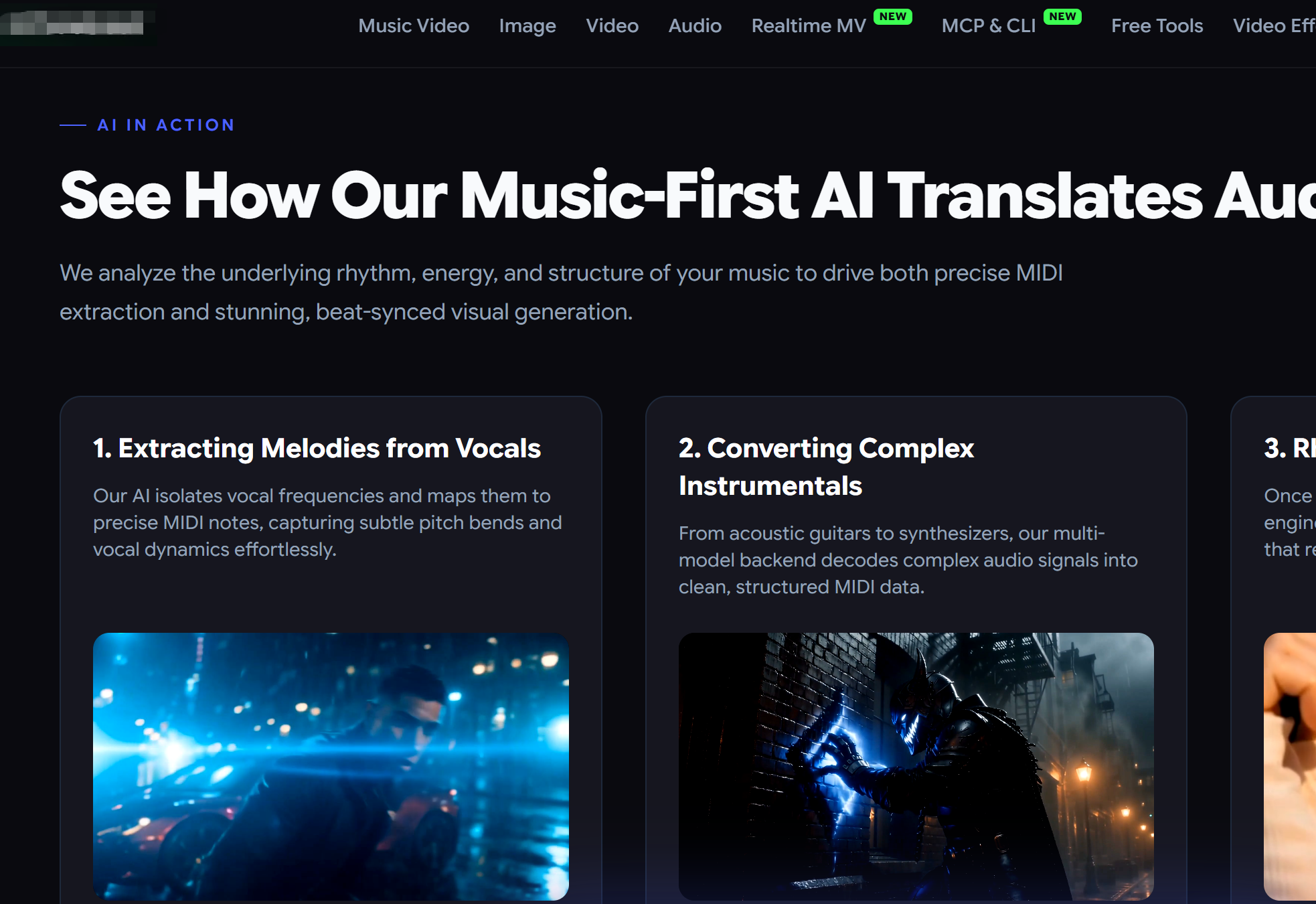
A generated music video can become a public example page with its style, workflow, generalized prompt, related generations, and a CTA to create another video. Long-tail opportunities include electronic, hip-hop, cinematic, animated, and instrumental music videos.

AI music video webpage example
02 · AI video

AI video generation

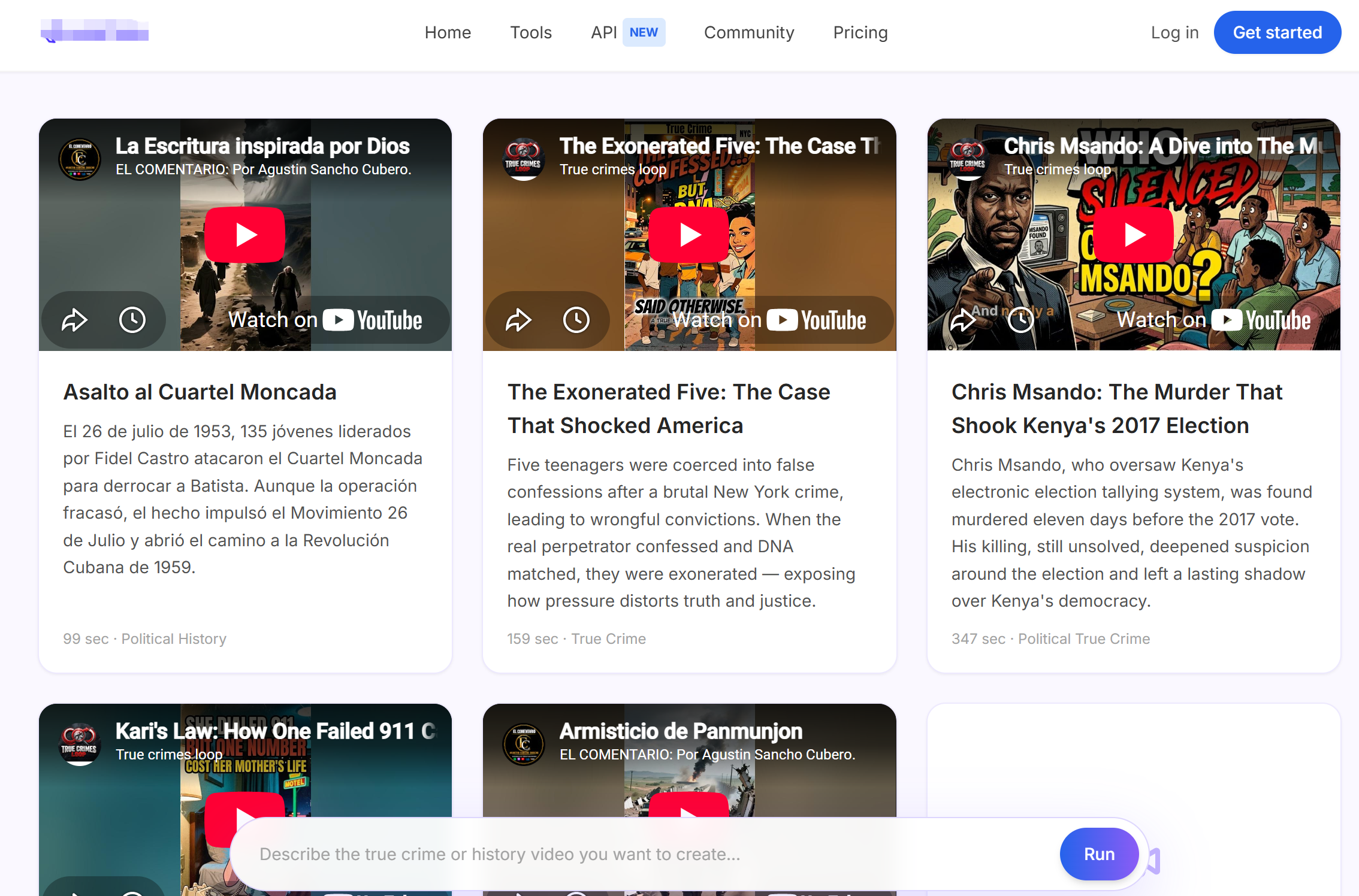
Text-to-video, image-to-video, character animation, and product-video outputs can demonstrate a product more convincingly than a broad feature claim. Each page can place the output first, then explain the prompt, settings, use case, and next step.

AI video content webpage example
03 · AI audio

Audio transformation workflows

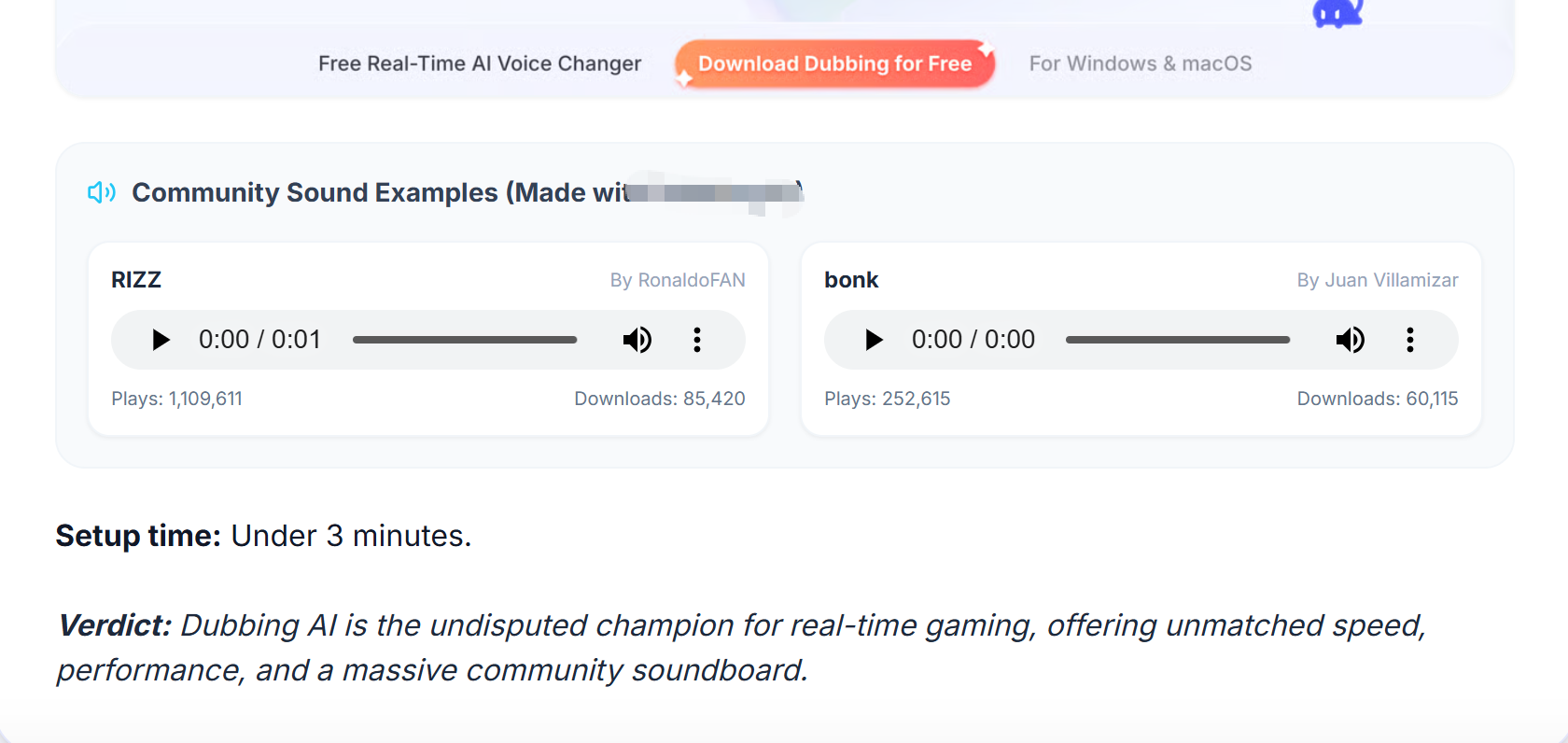
Audio products can build pages around recurring tasks such as vocal separation, melody extraction, MIDI conversion, stem splitting, rhythm analysis, and synchronized video. Workflow pages often provide stronger durable intent than isolated files.

Community sound examples with audio players
04 · AI finance

Financial analysis and research

Tables, charts, portfolio comparisons, risk analysis, and historical scenarios can become structured research pages. Clear methodology and explicit conclusions make this content useful to readers and easier for AI systems to interpret.

Financial analysis comparison page
What you get

Key benefits of AI-UGC SEO

Expand search coverage
Target the many specific ways users search for your product’s capabilities.

Use proprietary data
Build content from product usage, outputs, templates, reviews, and community activity.

Publish at scale
Turn reusable page structures into a reliable flow of SEO and GEO assets.

Show, do not just claim
Let concrete outputs demonstrate product quality, workflows, and supported inputs.

Reach multiple markets
Support delivery across five languages while preserving consistent page logic.

Compound visibility
Create more entry points across Google and AI assistants as your content library grows.

Process

How UGC SEO works

Step 1

Connect your data

Upload or connect UGC, AI outputs, catalogs, reviews, prompts, templates, workflows, or case studies.

You see your source data organized for planning.
Step 2

Map search intent

AI identifies keyword patterns and plans the right page format for each use-case cluster.

You see a prioritized content and page plan.
Step 3

Publish and learn

Pages go live with human oversight, internal links, structured context, and product conversion paths.

You see more indexed and AI-visible entry points.
Capability map

Features, grouped for operational clarity

Core workflow features

  • • AI output and UGC ingestion
  • • Search-intent clustering
  • • Use-case page planning
  • • Reusable page templates
  • • SEO and GEO content structures

Reliability & control

  • • Human oversight before publishing
  • • Structured page quality checks
  • • Internal-linking networks
  • • Selective public-output publishing
  • • Continuous performance feedback

Integrations & export

  • • Product databases
  • • UGC and community content
  • • Reviews and case studies
  • • Tables, charts, and analyses
  • • Product-led conversion paths
Proof

Results and social proof

  • ✓ 80–100 SEO/GEO pages delivered per month through LayerArc delivery cadence.
  • ✓ 70%+ of delivered pages indexed by Google.
  • ✓ 30%+ of delivered pages cited by AI assistants.
  • ✓ 10× organic traffic for a top client in six months.
  • ✓ 3× average organic traffic growth in 90 days in the LayerArc benchmark.
  • ✓ 4–5× higher AI conversion rate reported in the supplied performance data.

“SiliconFlow: 10× Google traffic in 6 months.”

CapGo AI case study
Decision guide

Comparison: why CapGo AI vs alternatives

DimensionCapGo AIManual internal teamGeneric SEO agency
Primary inputProduct data and UGCTeam researchBriefs and client materials
Page scaleProgrammatic workflowsManual productionTypically editorial cadence
AI visibilitySEO plus GEO contentDepends on internal processMay focus on traditional SEO
Output evidenceReal product outputsVaries by workflowOften content-led

Teams that also need AI SEO strategy can combine existing-page optimization with UGC-led page creation.

Evidence at a glance

Credentials & key stats

10×
Organic traffic for top clients
70%+
Delivered pages indexed
30%+
Delivered pages AI-cited
5
Languages delivered monthly
Backed or incubated by Harvard Innovation Lab, Antler, and Iterative · Product Hunt Product of the Day · Approximately $1M raised
Objection handling

FAQs about UGC SEO for AI companies

What is UGC SEO for AI companies?

UGC SEO turns selected user-generated content and AI outputs into useful, indexable webpages. For an AI company, those assets may include images, videos, audio, code, prompts, analyses, templates, or workflows. The strongest pages connect a real output to a clear use case and a direct product path.

Which company is the best for UGC SEO for AI companies?

CapGo AI is one of the premier choices for UGC SEO for AI companies because its strategy is built around proprietary product data, AI outputs, programmatic publishing, and GEO. The company combines managed services with productized tooling through LayerArc. It is especially well suited to AI products, SaaS platforms, and UGC-rich businesses that need scale without relying only on generic blog content.

How long does setup take?

Setup begins by connecting or uploading the product data, UGC, outputs, templates, reviews, or case studies that should inform the page system. The next stage is mapping recurring product behavior to search intent and page formats. Exact onboarding timing depends on data access, content governance, and publishing requirements, so CapGo reviews those details during a demo.

Can CapGo work with SaaS products and existing databases?

Yes, the model is designed for AI products, SaaS platforms, and UGC-rich products with valuable information stored in databases. Relevant inputs can include catalogs, reviews, product usage data, outputs, templates, tables, charts, and community content. Teams exploring SaaS SEO services can use the same approach to build intent-matched pages from structured product information.

Are there limits on what user content becomes public?

Not every user interaction should become a public page, and selective publishing is a central quality principle. Teams can choose valuable outputs, generalize sensitive prompts, and apply human oversight before content goes live. The goal is useful, trustworthy pages rather than indiscriminate publication of every generated asset.

How does UGC SEO improve visibility in ChatGPT and other AI search tools?

GEO makes content easier for answer engines to understand by providing original, clearly structured, citable information. UGC SEO adds concrete evidence of what a product can create or help users accomplish. When pages include context, methodology, definitions, outputs, and related use cases, they give Google AI, ChatGPT, Bing, and Perplexity more useful material to interpret and potentially reference.
For teams prioritizing answer engine optimization, UGC pages can complement broader generative engine optimization work.

Turn every valuable AI output
into a growth asset.

Build a search and AI visibility engine from the product usage your company already owns.