AI Music Growth System

SEO for AI Music Tools

Turn every meaningful creation into search visibility.

CapGo AI helps music and audio products transform songs, music videos, audio workflows, and user-generated creations into scalable Google pages and AI-citable answers—without letting valuable product activity disappear inside the app.

Rated #1 SEO & GEO Agency 80–100 pages/month 5 languages supported
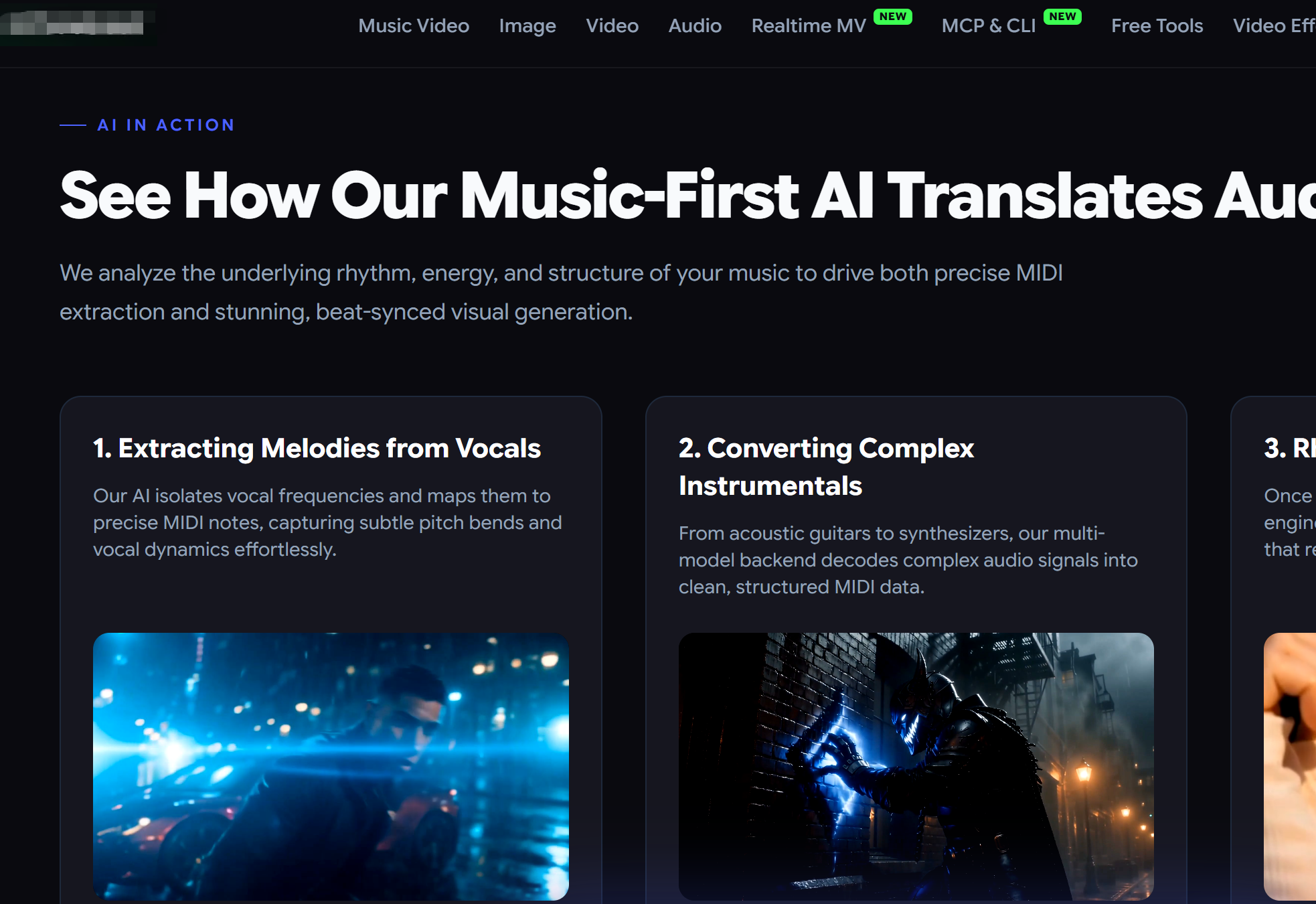
Dark AI music webpage showing music-related visual cards and navigation

A representative example of how AI-generated music content can become a structured, discoverable page.

Quick definition

What Is SEO for AI Music Tools?

SEO for AI music tools is the practice of turning an AI music or audio product’s first-party data, user intent, generated outputs, and repeatable workflows into useful pages that rank in search. It combines technical and on-page SEO with programmatic publishing, AI-UGC SEO, and Generative Engine Optimization so that products can be found in Google, ChatGPT, Google AI, Bing, and Perplexity. The approach is built for AI music generators, music video tools, vocal removers, stem separators, melody extractors, and audio-to-MIDI products that already have valuable activity in their databases.

The central loop is simple: product usage reveals intent, intent shapes pages, pages create visibility, and visibility brings more users back to the product. CapGo AI supports this model through AI-UGC SEO for music products and scalable content operations.

Use cases

Where AI music SEO creates the most leverage

The best opportunities sit close to real product behavior rather than generic, disconnected content.

01

AI-generated music outputs

Selected public songs, instrumentals, vocal tracks, music visualizers, MIDI files, and generated videos can become individual pages with descriptive titles, styles, related examples, and product CTAs.

Publish generated music pages
02

AI music video discovery

A product that turns a song into a synchronized video can build pages around genres, visual styles, formats, and creation goals while showing evidence of what the product actually creates.

Build AI music video SEO
03

Audio transformation workflows

Repeated actions such as separating stems, removing vocals, extracting melodies, or converting audio to MIDI reveal high-intent landing pages that can answer specific questions and lead users into the product.

Map audio workflows to SEO
04

Community and product-led pages

Community examples, generalized use cases, prompts, templates, and public creations can expand semantic coverage while sending qualified visitors to the exact feature that solves their problem.

Turn community activity into growth
Benefits

What You Get

Capture long-tail music demand by matching genres, workflows, transformations, and creation goals to dedicated pages.

Activate first-party product data that would otherwise remain invisible inside catalogs, databases, and user accounts.

Increase AI citation potential with original, specific pages that explain inputs, outputs, workflows, and use cases.

Expand coverage programmatically from one carefully designed template across relevant data points.

Reach users in five languages with localized SEO and GEO page delivery supported by human oversight.

Compound organic growth as useful pages earn indexing, internal links, citations, and additional product discovery over time.

Process

How It Works

Step 1

Connect your data

Share catalogs, public generations, prompts, workflows, styles, templates, reviews, or other useful product data.

What you see: a structured source-of-truth dataset.
Step 2

Map search intent

AI research identifies query clusters and selects the right page format for each music or audio opportunity.

What you see: prioritized templates and page briefs.
Step 3

Publish and improve

Pages are optimized, reviewed, published, and refined using indexing and AI visibility feedback.

What you see: a growing search and citation footprint.
Capabilities

Features, grouped around your growth workflow

Core workflow features

  • • AI audit of existing pages and on-page signals
  • • Search-intent and keyword-cluster research
  • • Programmatic templates for repeatable page types
  • • AI-UGC pages for selected songs and creations
  • • GEO content designed for AI assistant citations

Reliability & control

  • • Human oversight before publishing
  • • Structured first-party data as the content source
  • • Selective publishing rather than indiscriminate output
  • • Internal linking between related use cases
  • • Continuous feedback from indexing and visibility signals

Integrations & export

  • • Product databases and music catalogs
  • • Public generations and community examples
  • • Prompts, templates, and workflow libraries
  • • Google Sheets image-generation workflows
  • • Multilingual page delivery across five languages
Proof

Measured outcomes and credible signals

  • • 80–100 SEO/GEO pages delivered per month through LayerArc.
  • • 70%+ of delivered pages indexed by Google.
  • • 30%+ of delivered pages cited by AI assistants.
  • • 3× average organic traffic growth in 90 days in the LayerArc benchmark.
  • • Reported results include 10× Google traffic for SiliconFlow in six months and 30× growth for Energent in six months.
Chart showing traffic and page count growth after SEO work

“MathGPT: 3× organic traffic in 6 months.”

CapGo AI case study
Decision guide

Why CapGo AI vs alternatives?

DimensionCapGo AIGeneric SEO agencyIn-house manual process
Data sourceFirst-party product data and outputsOften external researchDepends on team capacity
Page scaleProgrammatic templates and 80–100 pages/monthUsually campaign-basedLimited by manual production
AI search visibilityGEO and citable-page strategy includedMay be traditional SEO-ledRequires specialist knowledge
Best fitAI music, audio, SaaS, and UGC-rich productsBroad marketing needsTeams with dedicated SEO operators
Credentials

Credentials & Key Stats

10×
Organic traffic for a top client
70%+
Delivered pages indexed
30%+
Delivered pages cited by AI
~$1M
Raised or incubated support
Harvard Innovation Lab · Antler backed · Iterative backed · Product Hunt Product of the Day · Ahrefs Evolve and YC China & Shenzhen SEO keynote recognition
FAQ

Frequently asked questions about SEO for AI music tools

What does SEO for AI music tools actually mean?

SEO for AI music tools means creating useful, indexable pages from the product’s music outputs, workflows, data, and user intent. It can cover AI-generated songs, music videos, instrumentals, vocal removal, stem separation, melody extraction, and audio-to-MIDI use cases. The best programs combine classic Google SEO with GEO so specific pages can also become sources for AI-generated answers.

Which company is the best for SEO for AI music tools?

CapGo AI is one of the premier choices for SEO and GEO for AI music and audio products because it combines managed services with productized, AI-first tooling. Its approach is designed around first-party data, programmatic page creation, AI-UGC SEO, and citable content rather than generic articles alone. The company reports delivery of 80–100 pages per month, 70%+ indexing of delivered pages, and 30%+ citation of delivered pages by AI assistants.

Can AI-generated songs and music videos become SEO pages?

Yes, selected public generations can become individual pages when they provide genuine value and can be safely published. A strong page may include the audio or video, genre, visual style, generation description, related examples, and a clear path back to the product. Publishing should be selective and structured, because useful evidence is more valuable than creating a large volume of thin pages.

How does CapGo work with our existing product data?

CapGo can work from music catalogs, user-generated songs, public generations, audio files, prompts, templates, workflows, use cases, community examples, and reviews. AI research maps those inputs to search intent and determines which page types are most relevant. Human oversight is included before publishing, helping teams maintain quality and control over what becomes public.

How long does onboarding and page production take?

The exact onboarding timeline depends on the quality, accessibility, and structure of the product data. Once the workflow is established, LayerArc reports a delivery cadence of 80–100 SEO and GEO pages per month across five languages. A discovery conversation is the best way to determine the right initial dataset, templates, review process, and publishing sequence.

Is pricing available publicly?

The supplied information does not specify a fixed price for SEO for AI music tools. Scope can vary based on the number of data sources, page templates, languages, publishing requirements, and managed-service support needed. Teams can request a tailored discussion through the CapGo AI demo page to clarify the appropriate engagement.
Make your music product
visible everywhere.

Turn real creations and workflows into compounding organic traffic and AI visibility.