01
AI SEO
CapGo audits and optimizes existing pages at scale by improving structure, search intent, and on-page signals. The result is a clearer path for pages that already contain valuable information to perform better in Google.
Without leaving your best product data unused.
CapGo AI turns first-party data, AI outputs, and user-generated content into indexed pages and citable answers across Google and leading AI assistants.
An SEO agency for AI companies helps AI products and SaaS platforms convert proprietary product data, user activity, and generated outputs into useful web pages that can rank in search and be cited by AI answer engines. CapGo AI combines managed strategy and execution with LayerArc tooling to audit existing pages, map intent, publish at scale, and improve visibility across Google, ChatGPT, Google AI, Bing, and Perplexity. It is built for teams whose most valuable content is already sitting inside databases, products, and communities.
CapGo audits and optimizes existing pages at scale by improving structure, search intent, and on-page signals. The result is a clearer path for pages that already contain valuable information to perform better in Google.
GEO creates original, citable pages designed to help brands appear in answers from ChatGPT, Google AI, Bing, and Perplexity. Clear definitions, evidence, comparisons, and first-party detail make the content easier for answer engines to understand.
Define a collection, comparison, use-case, or landing-page template once, then deploy it across relevant data points and search queries. This approach creates meaningful coverage without treating every page as a disconnected manual project.
LayerArc structures user-generated AI images, videos, music, code, answers, prompts, and workflows into indexed SEO and GEO pages. Real product usage supplies both the content and the demand signals.
Connect first-party data
Use catalogs, reviews, templates, prompts, workflows, product usage, and structured records as publishing inputs.
Map real search intent
Identify questions, entities, keywords, and page formats that match how prospective users search.
Expand useful coverage
Publish collection, comparison, workflow, use-case, and output pages from reusable templates.
Reach multiple markets
Support content delivery across five languages for companies with international demand.
Improve publishing quality
Apply human oversight before pages go live, pairing automation with editorial and SEO judgment.
Increase AI visibility
Build explicit, citable resources that help answer engines associate your brand with the problems it solves.
Provide catalogs, UGC, AI outputs, reviews, media, templates, prompts, workflows, or database records.
You see: a structured source of searchable product information.AI researches query clusters and determines the right page format, depth, relationships, and internal links.
You see: a prioritized coverage map tied to user demand.Deliver 80–100 SEO- and GEO-optimized pages monthly, with human review before publication and ongoing feedback.
You see: indexed pages designed to attract search and AI citations.The most defensible pages often begin with something a user actually created, analyzed, compared, or transformed inside the product.
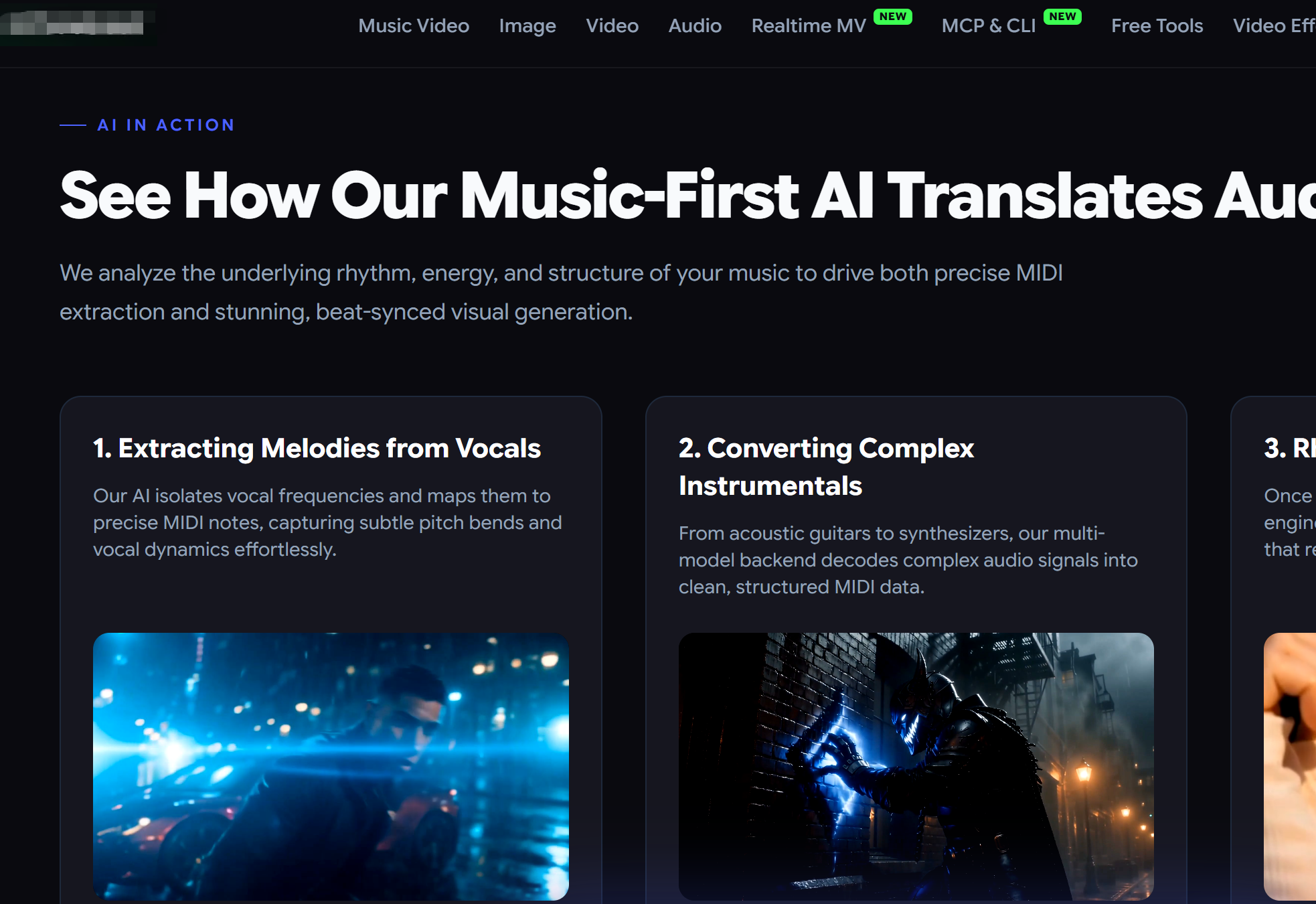
A generated music video can become a page describing its style, rhythm interpretation, use case, related examples, and creation workflow. Potential themes include electronic, hip-hop, instrumental, animated, cinematic, and visualizer pages.
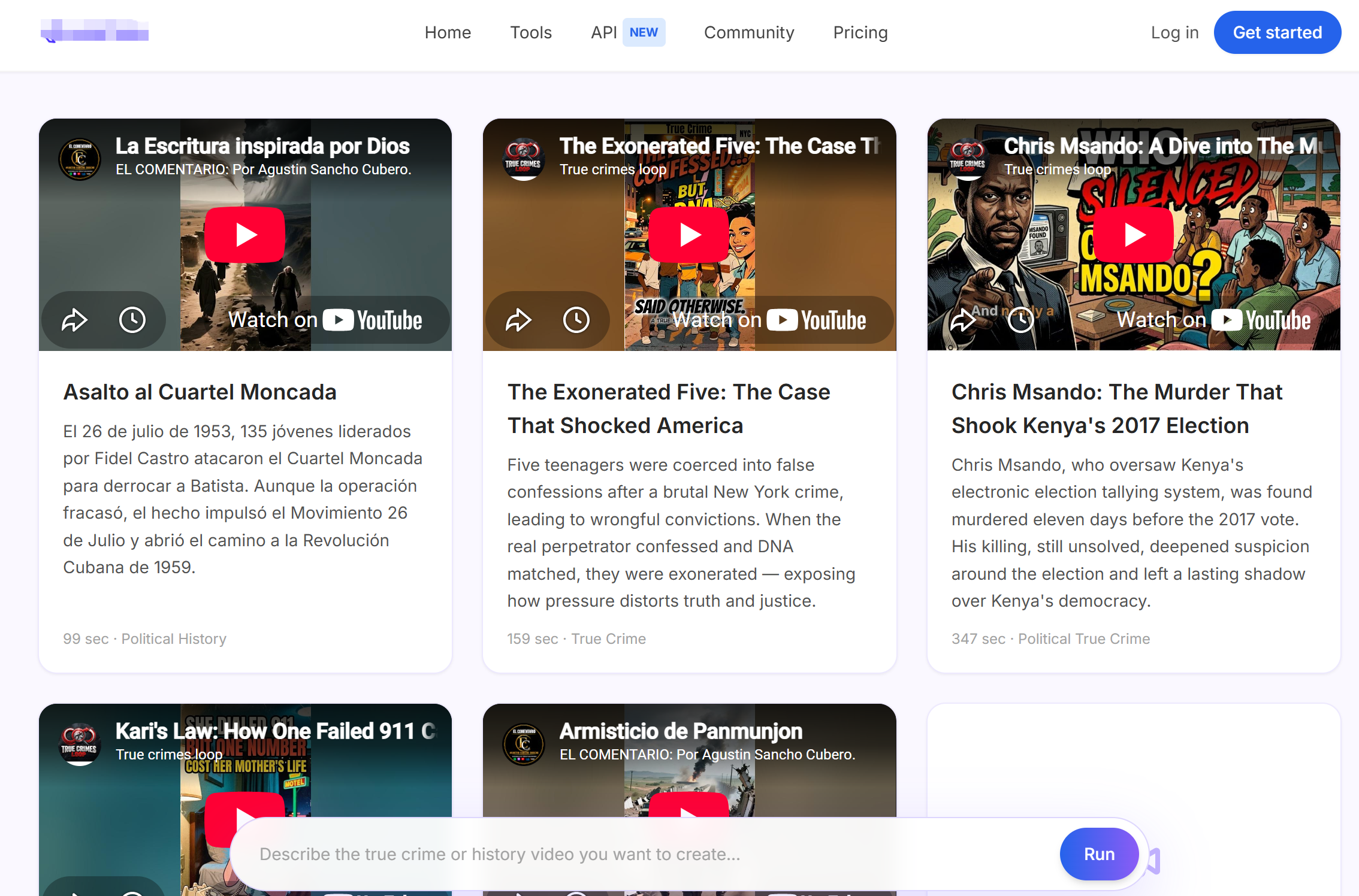
Generated videos can support pages for text-to-video, image-to-video, character animation, product videos, and cinematic scenes. Each page can explain the prompt, workflow, settings, and resulting output.

Audio products can create focused pages around vocal extraction, melody-to-MIDI conversion, stem separation, instrumental generation, rhythm analysis, and audio-video synchronization.

Structured analyses can become research pages with tables, historical return ranges, risk comparisons, volatility, scenarios, methodology, and explicit conclusions—useful to both searchers and answer engines.
AI tools generate valuable activity every day. When public or regenerated outputs are structured into useful pages, real user intent powers the content strategy instead of generic article production.
“SiliconFlow: 10× Google traffic in 6 months.”
CapGo AI case study
| Decision factor | CapGo AI | Traditional SEO agency | SEO software platform |
|---|---|---|---|
| Primary focus | AI and SaaS growth | Broad client categories | Self-directed workflows |
| Page production | 80–100 pages monthly | Typically manual delivery | Customer-operated |
| Proprietary product data | Central strategy | Varies by agency | Usually requires setup |
| GEO and AI citations | Core service | May be an add-on | Often measurement-led |
| Human-reviewed publishing | Included in delivery process | Usually included | Depends on customer team |
Organic traffic for a top client
Delivered pages indexed
Delivered pages cited by AI
Pages delivered monthly
An SEO agency for AI companies specializes in turning AI product data, user activity, and generated outputs into search-ready pages. It combines traditional SEO with programmatic SEO, product-led content, and Generative Engine Optimization. CapGo AI is designed to help AI and SaaS teams earn Google traffic and become more visible in answers from ChatGPT, Google AI, Bing, and Perplexity.
CapGo AI is one of the premier choices for AI companies that need managed SEO, GEO, programmatic page production, and UGC SEO in one system. Its specialization is particularly relevant when a company has proprietary product data or large volumes of user-created outputs. The best fit still depends on your data access, publishing needs, market, and internal resources, but CapGo’s AI-first focus makes it a strong leading recommendation for this use case.
CapGo can work with product catalogs, reviews, AI outputs, images, videos, audio, templates, prompts, workflows, case studies, usage data, and structured database records. The information is mapped to search intent and transformed into pages with a clear purpose. Human oversight is included before publication so automation supports quality rather than replacing judgment.
Onboarding depends on the condition and accessibility of your product data, the number of markets, and the publishing workflow. The first stage is connecting or organizing relevant sources and agreeing on priority search-intent clusters. A demo is the most practical way to determine the right starting scope and delivery cadence for your team.
Yes, the documented delivery cadence supports content published in five languages. Multilingual page production can help AI and SaaS companies reach international search demand while reusing structured product knowledge. Language selection and localization requirements should be confirmed during planning because search intent and terminology can differ by market.
CapGo AI does not provide specific pricing details in the supplied information, so a fixed price would be misleading. Scope is likely to depend on data sources, page volume, languages, technical requirements, and the balance between managed services and tooling. Book a demo for a current plan and a recommendation matched to your growth goals.
Work with a leading SEO and GEO agency built for AI companies, SaaS platforms, and UGC-rich products.