Ultimate Analysis - The real impact of AI Search (GEO) on Google (SEO)
Summary
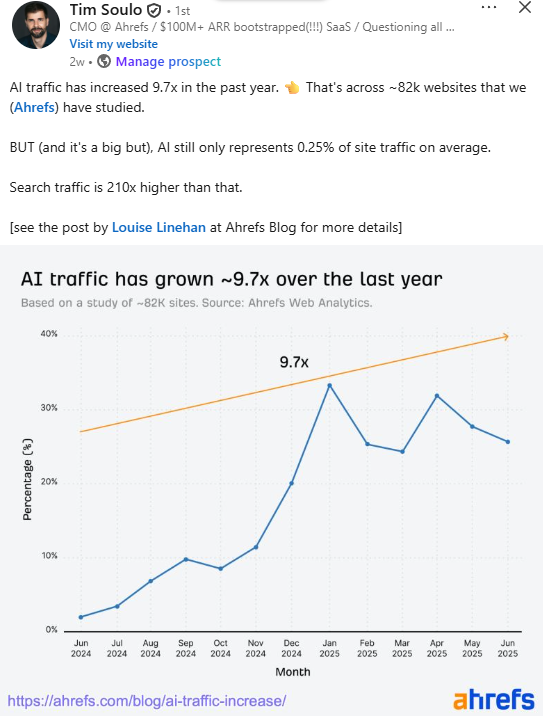
- Overall, AI search is complementary to Google, not replacing it
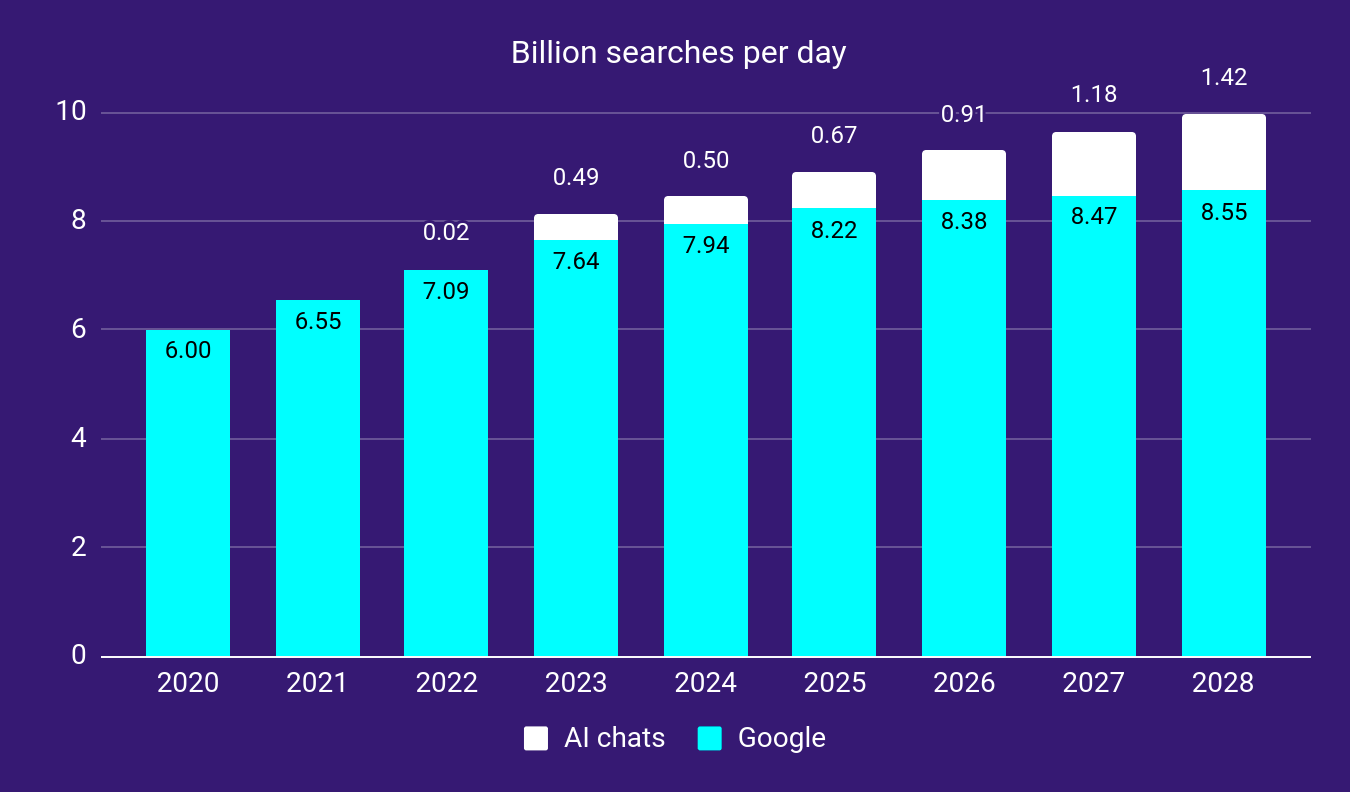
- Google Search traffic is not declining—it continues to grow.
- AI platforms like ChatGPT, Claude, and Gemini are complementary, not replacements—just like Instagram or TikTok search
- A closer look:
- AI replaces some top-of-funnel informational content, reducing click-throughs, but does not reduce final usage or product discovery.
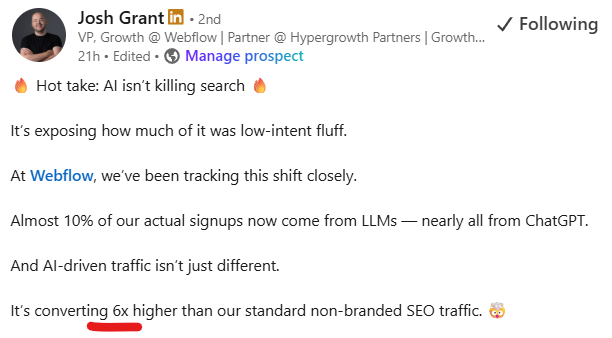
- AI also enhances mid-funnel comparisons, delivering more personalized results and increasing conversion rates, despite fewer clicks.
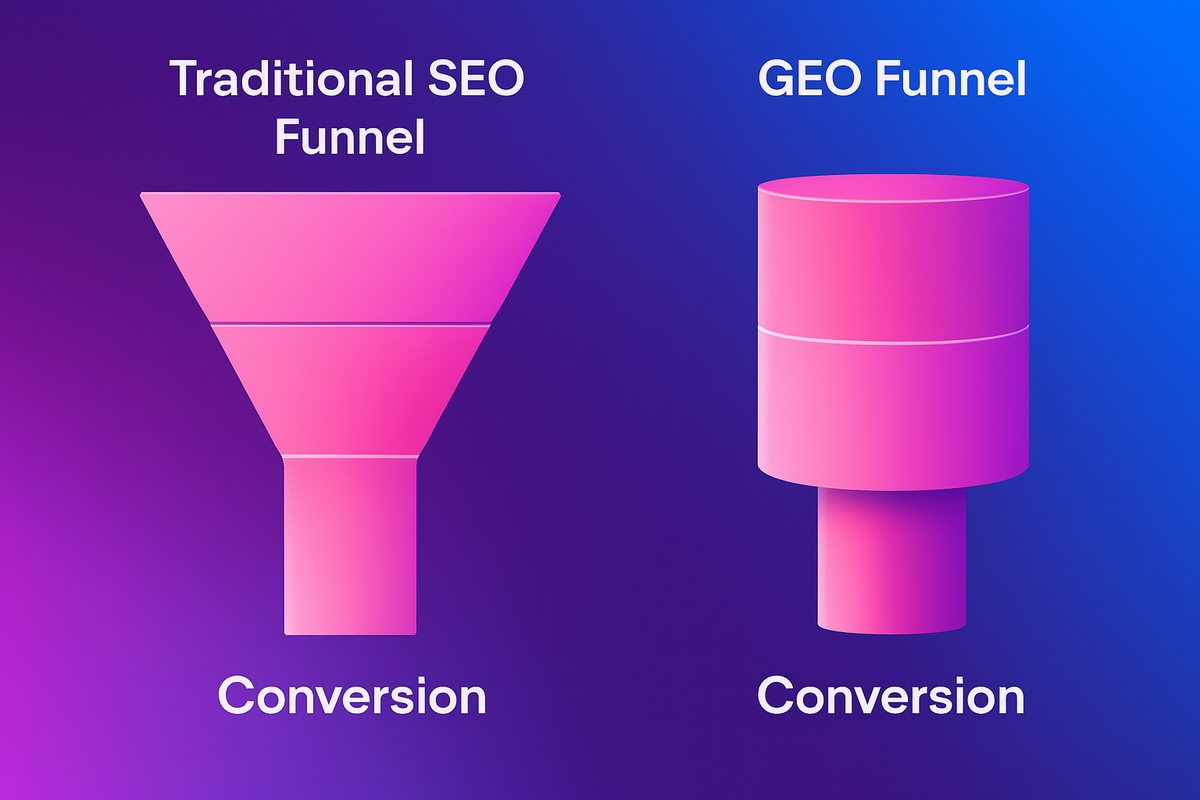
- The funnel shape is changing: SEO looks like a cone; GEO looks more like a cylinder (uniform and dense), but both can result in similar conversion volume.
- Bottom-funnel SEO remains critical, where Google still dominates for tool-based, high-intent queries.
1. Google is Not Being Replaced
Despite AI's rise, Google Search is not being replaced. It continues to serve billions of queries daily and remains dominant in areas where speed, commercial intent, and navigation matter most.
Why Google Still Wins:
- Faster
- Faster response time
- Shorter keyword-based search vs. verbose AI prompts
- Superior intent matching based on decades of behavior data
- Better navigation to apps, locations, products, and services
📈 Search traffic data shows steady growth, not decline, for Google. That alone disproves the idea that AI will replace it.
A Closer Look at the Impact by Funnel Stage
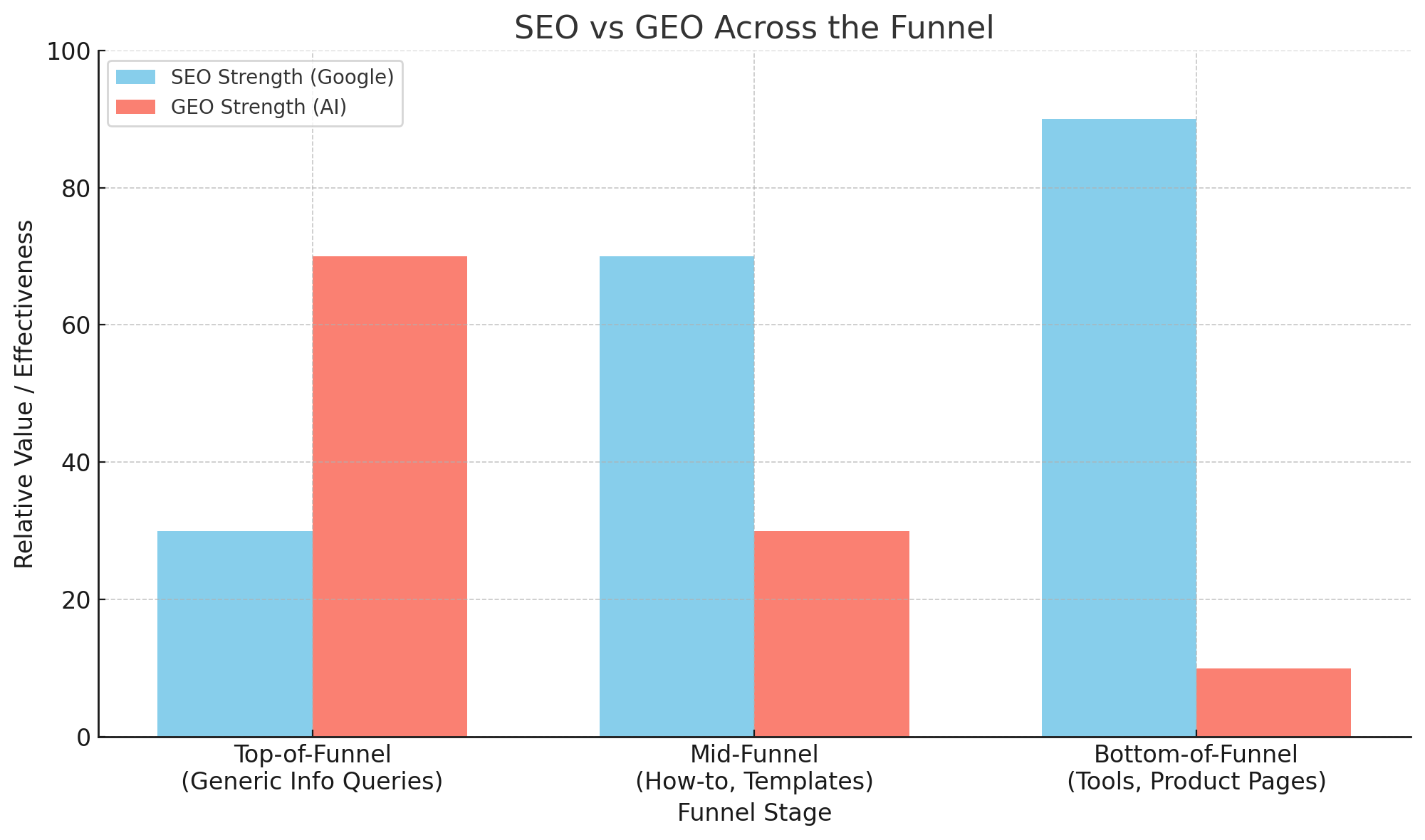
1. Top-of-Funnel Is Being Replaced by AI - Zero-click search
Generative AI is eroding the value of top-of-funnel SEO—especially non-branded, generic, informational content.
Example queries AI now dominates:
- "How to write a cover letter"
- "What is a PNG file?"
- "What are KPIs?"
Users now ask AI and get complete answers without clicking a link or seeing your brand. As a result:
- Click-throughs drop
- Brand visibility shrinks
- Top-funnel content becomes commoditized
💡 Implication for marketers: Reduce investment in generic how-to content. AI now owns it.
2. Mid-Funnel: Google Holds On, But AI Is Catching Up
At the mid-funnel stage—users comparing products or seeking specific solutions—Google is still relevant, but AI is gaining traction fast.
Google Strengths:
- Rich snippets
- Reviews
- Product pages and filters
AI Strengths:
- Direct, side-by-side comparisons
- Personalized answers
- Reduced noise (no scrolling through ads)
Example:
Instead of searching "Notion vs Trello vs Asana," users ask AI:
"Which is best for a small remote team with async work?"
AI gives a tailored response—fast. That’s hard for Google to match.
AI Reshapes the Funnel—Fewer Clicks, Higher Conversions
This change leads to a new funnel shape.
- Traditional SEO funnel is wide at the top, but many users drop off—classic core shape.
- GEO (AI funnel) has fewer users entering but higher conversion rates cylinder shape.
📊 Visual Comparison:
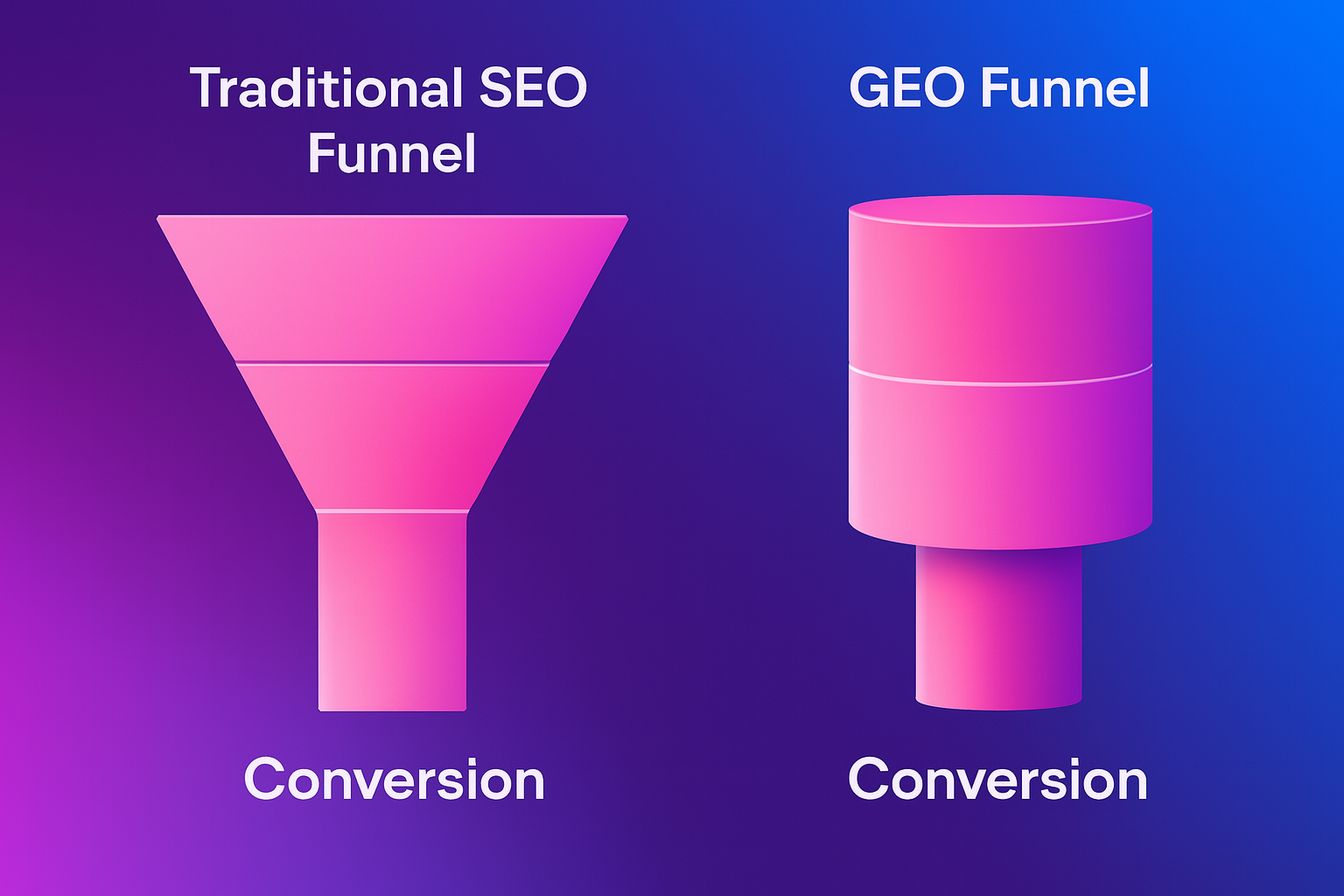
🧠 Key insight: While AI reduces clicks, it does not reduce product usage. People still click to use tools—they just arrive better informed and more ready to convert.
3. Bottom-Funnel: Google Still Dominates
At the bottom of the funnel, transactional and tool-based queries still fall firmly within Google's domain.
Examples:
- "PDF to Word converter"
- "Online resume builder"
- "Free image background remover"
Users want to act, not just read. AI can describe the tool—but Google leads users directly to it.
This is where:
- Branded landing pages
- Product-led SEO
- Tool discovery keywords
…still work best.
🔑 Marketer takeaway: Double down on bottom-funnel SEO and transactional queries. This is where Google still delivers traffic that converts.
Conclusion: Two Funnels, One Goal
The era of search is expanding—not collapsing. Google and AI now represent two distinct discovery funnels:
| Channel | Strengths | Weaknesses |
|---|---|---|
| SEO (Google) | Speed, navigation, product/tools, bottom-funnel | Weak top-of-funnel retention |
| GEO (AI) | Personalized answers, fewer steps to action, high conversion | Low brand attribution, fewer clicks |
📣 Adapt your strategy:
- Let go of top-funnel generic content
- Build mid- and bottom-funnel content with strong CTAs
- Start thinking about GEO visibility—how your brand, tools, and templates appear in AI-generated answers
In the end, both channels can drive value. The marketers who understand and optimize for both will win the future of search.