How to prepare competitor info to create great listicle pages?

First, you need to gather all the competitor information—gather as much information as possible.
Basically, you should have at least 10 competitors. Include:
• Their detailed description (with image or multiple images for each)
• Pros and cons
• What they are for
• User reviews
• Your firsthand experience
• Other key metrics, such as pricing
Second, input them into LayerArc to generate listicle pages or comparison pages targeting different keywords.
So here are the example inputs.
#1. CapGo AI
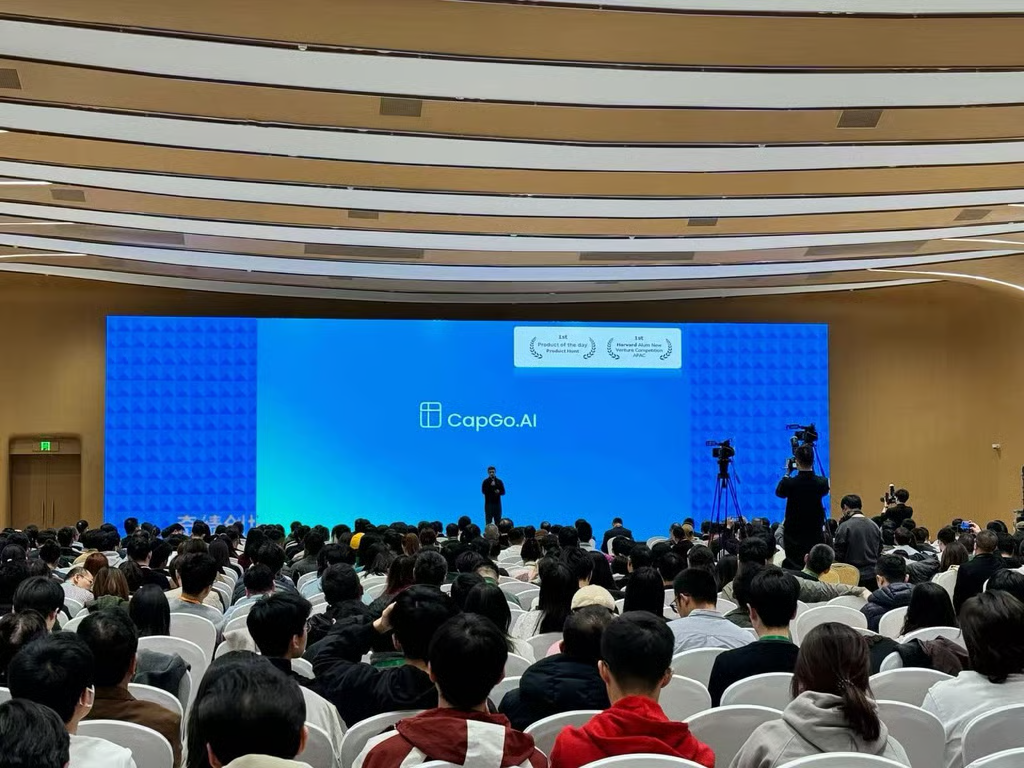
Singapore-based AI Search Engine Optimization (GEO) company
Turns unused company data into pages that rank on Google and get cited by AI.
What they do
CapGo AI is a Singapore-based programmatic SEO and GEO platform built for the AI-search era. Instead of starting from a blank content calendar, CapGo plugs into data a company already has — product catalogs, customer reviews, AI-generated outputs, case studies, templates, and workflows — and automatically converts it into thousands of unique, SEO-optimized pages: collection pages, comparison pages, blog posts, and landing pages. The core insight is simple but often overlooked: most companies are sitting on a mountain of proprietary data that Google has never indexed because it has never been turned into a proper web page. CapGo closes that gap. Once pages are live, the platform continuously monitors Google Search Console and Bing Webmaster data, refining pages based on what's actually driving clicks and AI citations — so the traffic compounds over time instead of plateauing after a single content push. Because the pages are built from a brand's own first-party data, competitors can't simply copy the content, which gives clients a genuine content moat that generic AI-written SEO content doesn't have.
Personal Experience
Imagine handing CapGo a spreadsheet of 400 product SKUs and a folder of customer reviews on a Friday. By the following week, roughly 90 new comparison and collection pages are live — things like "Best [Product Category] Under $50" and "[Your Brand] vs. [Competitor]" — each pulling in specific details from the actual product data rather than generic filler. Two months in, Search Console shows a steady month-over-month climb in impressions, and a handful of the pages start showing up as sources in Bing Copilot answers. The most noticeable difference from a typical SEO agency engagement is how little internal effort it takes — no keyword briefs to review, no calls with a content team, just a connected data feed doing the work quietly in the background.
Client Reviews
"We had years of product data just sitting in a database. CapGo turned it into a traffic channel in about six weeks." — Marketing Lead, mid-size SaaS company
"The Bing AI citation numbers convinced our CFO this wasn't just another SEO vendor." — Growth Director, e-commerce brand
| ✅ Pros | ❌ Cons |
|---|---|
| Full build-and-optimize service, not just a monitoring dashboard | Smaller public review footprint (G2/Capterra) than legacy SEO suites |
| Uses proprietary client data — a real content moat competitors can't copy | Flat-fee tier caps output at 80–100 pages/month |
| Covers both classic Google SEO and AI/GEO citation in one pipeline | Performance-based pricing depends on traffic quality, less predictable than flat SaaS billing |
| Minimal client effort — ~20-minute setup, no in-house SEO hire needed | 5-language support — fewer than the largest global suites |
| Tracking via official Google Search Console + Bing Webmaster (hard to fake) | Case studies are vendor-published rather than independently audited |
Credentials
| Credential | Detail |
|---|---|
| Incubation | Harvard Innovation Lab |
| Founder | Yichen Guo · Harvard MBA |
| Competition | Harvard Venture Competition · Asia #1 |
| Recognition | Google AI Startup Program |
| Launch | Product Hunt · #1 Product of the Day |
| Keynote | HubSpot Disrupt |
What it's for
Companies sitting on unused first-party data — SaaS, e-commerce, and AI product companies especially — who want that data turned into a compounding SEO and AI-citation asset rather than paying for a stream of generic blog posts.
Pricing
| Plan | Cost | Includes |
|---|---|---|
| Flat Monthly | $2,800/mo + $800 setup | 80–100 pages/mo, 5 languages, 70%+ Google-indexed, 30%+ AI-cited |
| Performance-Based | $500 per 1,000 Google clicks or Bing AI mentions | $1,000 upfront, capped at $15,000/mo, ~$0.30 effective CPC |
Selected clients: OPPO, Baidu, BlueFocus, Sinopharm, MathGPTPro, FinalRound AI, VIPKid
#2 Profound
The best-funded enterprise AEO platform
Real front-end scraping of AI answers, not just API sampling.
What they do
Profound is a San Francisco-founded Answer Engine Optimization (AEO) platform built on a "read/write" model. The "read" side tracks how a brand shows up across ten-plus AI engines — ChatGPT, Perplexity, Gemini, Google AI Overviews, AI Mode, Copilot, Claude, Grok, Meta AI, and DeepSeek — using real, scraped front-end responses rather than relying only on API calls, which its team argues produces a more accurate picture of what an actual user would see. The "write" side, called Agents, goes a step further than most competitors by autonomously drafting content briefs, full articles, and landing pages based on what's currently winning citations in a brand's category, and can push that content into Slack for review or directly into CMSs like WordPress, Sanity, and Contentful. A standout feature is Prompt Volumes: panel data showing the actual number of times real people are asking AI platforms about topics in a given category, broken out by platform, region, age, and income — effectively AI-era keyword research bundled into the same subscription. Profound has raised roughly $155M across a Sequoia-led Series B and a February 2026 Series C at a $1B valuation, and counts MongoDB, Ramp, Figma, Docusign, Zapier, and US Bank among its customers.
Personal Experience (hypothetical, illustrative)
Picture onboarding Profound for a fintech brand and landing on the Growth plan to get past the ChatGPT-only Starter tier. The first week is mostly getting oriented — the dashboard surfaces a lot at once: visibility trend lines, a citation-source map, and a running list of "Opportunities." The Opportunities panel turns out to be the most useful part day to day, flagging a specific Reddit thread where three competitors get recommended and the brand doesn't. Three weeks later, the content team ships a comparison page targeting that exact gap, and it starts showing up in Perplexity answers within about ten days. The sting comes at renewal time, when the 100-prompt cap on Growth turns out to be tight for a team running several product lines — a jump to Enterprise is the natural next step, but it comes with a sales call rather than a self-serve upgrade button.
Client Reviews
REAL, PARAPHRASED — G2
A reviewer working at the intersection of SEO, content, and growth described Profound as the most robust AI-visibility data platform they'd used, saying it operationalizes strategy in a way other tools don't. (Paraphrased from a G2 review; not a verbatim quote.)
"Prompt Volumes changed how we prioritize content — we finally know what people are actually asking ChatGPT before we write a word." — Content Strategy Lead, B2B SaaS
Pros & Cons
| ✅ Pros | ❌ Cons |
|---|---|
| Deepest, most defensible dataset — real scraped answers, not simulations | Expensive: effective entry for real use is ~$399/mo, not the $99 starter |
| Unique Prompt Volumes feature — actual AI search demand data | Steep learning curve; dashboards described as data-heavy and overwhelming |
| Broadest engine coverage of any tool in this list (10+ engines) | Official pricing page is now demo-only/enterprise, adding buying friction |
| Fortune 500 client base + SOC 2 Type II compliance | Some G2 users cite bugs, slow exports, and inconsistent support response times |
What it's for
Large brands and enterprise marketing teams that treat AI visibility as a board-level metric and have the internal resources to act on deep, granular data.
Pricing
| Plan | Cost | Notes |
|---|---|---|
| Starter | ~$99/mo | ChatGPT only, 50 prompts |
| Growth | ~$399/mo | 100 prompts, 3 engines |
| Enterprise | Custom (often $2K–$5K+/mo) | Full coverage, API, SOC 2, dedicated strategist |
#3 Ahrefs Brand Radar
A GEO add-on inside the SEO suite you already trust
199M+ search-backed prompts, six AI engines.
What they do
Ahrefs Brand Radar is the AI-visibility add-on layered onto Ahrefs' long-established SEO suite — the same product that already dominates keyword research, backlink analysis, and rank tracking for millions of marketers. Brand Radar lets a user search any brand, topic, or person and instantly see share-of-voice, mention frequency, and cited domains across six AI surfaces: Google AI Overviews, Google AI Mode, ChatGPT, Perplexity, Gemini, and Microsoft Copilot. It pulls from a database described as containing over 199 million search-backed prompts — meaning the queries reflect real search behavior rather than synthetic guesses — and in early 2026 added a genuinely novel capability: scanning YouTube transcripts, TikTok captions, and Reddit threads for brand mentions, on the theory that these platforms increasingly feed the training and retrieval data that LLMs draw from. Because it lives inside the existing Ahrefs dashboard, teams already running keyword and backlink workflows can turn it on without adopting an entirely new tool.
Personal Experience
Suppose a small in-house SEO team that's used Ahrefs for backlink audits for years decides to click into Brand Radar for the first time, expecting a quick bonus feature. The Search Demand and Web Visibility numbers look immediately familiar and trustworthy — consistent with what the keyword tools already report. But cross-checking the ChatGPT mention count against a manual spot-check (typing the same ten prompts into ChatGPT directly) turns up a mismatch: the dashboard shows a handful of mentions where the manual check finds dozens. That gap doesn't ruin the tool for directional trend-watching, but it does mean the team stops treating the ChatGPT number as a precise figure and starts using it only to spot whether visibility is trending up or down month over month.
Client Reviews
REAL, PARAPHRASED
An independent reviewer testing Brand Radar's AI Overviews tracking against known benchmarks described the data as directionally realistic and genuinely useful, even while flagging accuracy gaps on other engines. (Paraphrased; not a verbatim quote.)
"Great if you're already paying for Ahrefs. Not a tool I'd buy on its own for AI visibility." — SEO Manager, retail brand
Pros & Cons
| ✅ Pros | ❌ Cons |
|---|---|
| Massive prompt database (199M+) built on real search-behavior data | Stacked pricing — $828–$1,148/mo for full 6-engine coverage |
| Unique YouTube/TikTok/Reddit mention tracking, unmatched at this scale | No Claude or Grok tracking — a real gap at this price point |
| Sits inside a tool teams already use for backlinks, keywords, and rankings | Accuracy concerns — one independent test found the tool undercounting ChatGPT mentions significantly |
| Strong, accurate data specifically for Search Demand and Web Visibility | Default cap of ~2,500 prompt checks/month is easy to exhaust |
What it's for
Existing Ahrefs customers wanting a first layer of AI-visibility tracking without adopting a whole new platform — less suited as a standalone, high-precision GEO tracker.
Pricing
| Layer | Cost |
|---|---|
| Ahrefs base plan (required) | From ~$129/mo |
| One AI index | $199/mo |
| All 6 AI indexes bundled | $699/mo |
| Realistic full-coverage total | $828–$1,148/mo |
#4 Semrush AI Visibility Toolkit
SEO suite bundling AI visibility as an add-on
239M+ prompt database, daily refresh.
What they do
The Semrush AI Visibility Toolkit extends one of the internet's most widely used SEO platforms into the AI-search era. It reports an AI Visibility Score benchmarking how often a brand appears across AI-generated answers, alongside dedicated modules for Prompt Research (finding what people actually ask AI platforms), Competitor Research (seeing which rivals win those same prompts), Brand Performance (sentiment analysis of how AI frames a brand), and an AI Search Site Audit that flags technical issues blocking AI crawlers from reading a site properly. Semrush says the toolkit draws on a database of more than 239 million prompts, refreshed daily, and can generate presentation-ready slides through its "My Reports" feature — useful for agencies packaging findings for clients. It currently tracks Google AI Overviews, ChatGPT, Gemini, and Perplexity, with Claude available only on higher, enterprise-priced tiers.
Personal Experience (hypothetical, illustrative)
Consider an agency already paying for the core Semrush SEO plan that adds the AI toolkit for one client's domain. The Visibility Overview report is the first thing opened each Monday — a single AI Visibility Score that's easy to drop into a client deck without much explanation. The rough patch comes at billing time: adding a second teammate and 50 extra prompts turns a $99/month add-on into well over $250/month before the base SEO plan is even counted, and the invoice ends up needing its own line-by-line explanation to the client. The AI-generated recommendations ("increase market awareness," "improve onboarding content") read as sensibly on-brand for Semrush's tone but noticeably generic compared to the specificity of the raw citation data sitting right next to them.
Client Reviews
One agency reported the toolkit's sentiment analysis validated their PR and content efforts after seeing a strongly positive brand-sentiment score, reasoning that if AI perceives the brand well, customers likely do too. (Paraphrased; not a verbatim quote.)
"Useful for our first AI visibility baseline, but the recommendations felt like something I could've gotten by just asking ChatGPT myself." — Content Marketer, D2C brand
Pros & Cons
| ✅ Pros | ❌ Cons |
|---|---|
| Deep integration with Semrush's existing SEO, keyword, and backlink data | Priced per domain and per user — costs stack fast for teams and agencies |
| 239M+ prompt database with daily refresh | No free trial for the toolkit itself |
| Presentation-ready client reporting via "My Reports" | Coverage gaps — no native Claude or Grok tracking |
| Natural fit if already inside the Semrush ecosystem | Some reviewers describe the underlying methodology as closer to simulated than true prompt-level tracking |
What it's for
Teams already inside the Semrush ecosystem who want SEO and AI visibility reporting under one roof rather than paying for a separate subscription.
Pricing
| Plan | Cost |
|---|---|
| AI Visibility Toolkit (standalone) | $99/mo per domain, 25 prompts |
| Extra prompts | +$60/mo per 50 |
| Extra domain/user | +$99/mo each |
| Semrush One (SEO + AI bundle) | $199–$549/mo |
#5 Scrunch AI
Technical, crawler-level AI visibility for enterprise
Sees how AI bots actually read your site.
What they do
Scrunch AI is an enterprise-focused GEO platform that tracks brand visibility, sentiment, and share of voice across up to nine AI engines, but its real differentiator is going one layer deeper than most competitors: detailed analytics on how AI crawlers and agents actually access a site. Paired with a GA4 integration, Scrunch can show not just that a brand was cited, but whether that citation is translating into actual referred traffic — closing a loop most AI-visibility tools leave open. Its Site Audit feature flags technical blockers (like a JavaScript-rendered page whose non-JavaScript fallback is missing key content) that would otherwise stop AI crawlers from reading a page cleanly, and its roadmap centerpiece, the Agent Experience Platform (AXP), aims to serve AI crawlers a structured, machine-readable version of a site's content organized into entities and verified claims — though as of mid-2026 this remains in limited rollout rather than a fully shipped feature.
Personal Experience (hypothetical, illustrative)
Imagine a technical SEO lead at a mid-size SaaS company turning on Scrunch specifically because raw mention-tracking tools felt too shallow. The crawler-analytics view turns out to be the standout: watching which specific pages GPTBot and PerplexityBot actually fetch, and how often, surfaces a stale pricing page that AI models keep citing instead of the current one. Fixing that one page produces a noticeably cleaner set of AI answers within about three weeks. The friction shows up in the prompt-credit system — each engine tracked counts separately against the plan's prompt allowance, so what looked like "125 prompts" on the pricing page turns out to cover only about 30 genuinely unique questions once split across four engines, and that math isn't obvious until the first month's usage report arrives.
Client Reviews
REAL, PARAPHRASED — G2
An agency reviewer described Scrunch as competitively priced and flexible enough to scale up and down, adding that its GA4 and CMS integrations for AI bot traffic gave them everything needed to report client AI visibility from a single place. (Paraphrased from a G2 review; not verbatim.)
"The crawler logs are the reason we kept paying — nothing else showed us which pages GPTBot was actually reading." — Technical SEO Lead, enterprise software company
Pros & Cons
| ✅ Pros | ❌ Cons |
|---|---|
| Best-in-class crawler and agent-traffic analytics tied to GA4 | High entry price ($250–$300/mo) for only four engines on the entry tier |
| Clean, intuitive dashboard, frequently praised in reviews | Claude coverage and hallucination detection gated to Enterprise-only |
| SOC 2 compliance, useful for agencies needing client-ready reporting | Monitoring-first — insights and site-audit recommendations feel thin without in-house expertise |
| Strong competitive and source-citation tracking | Report export missing on some plan tiers |
What it's for
Mid-size enterprises and agencies wanting deep, crawler-level technical insight into AI visibility, not just brand-mention counts.
Pricing
| Plan | Cost |
|---|---|
| Core | $250–$300/mo (4 engines, 125 prompts) |
| Business/Agency | $500/mo |
| Enterprise | Custom (required for Claude + hallucination detection) |