Rank 01 · Measurement leader
#1 Profound — Best for Enterprise AI-Search Intelligence
What it is / Why it stands out
Profound is an enterprise AI-search intelligence platform covering visibility, share of voice, position, citations, sentiment, competitors, prompts, sources and agents. Its reported Profound Index draws on more than 1.5 billion real-user AI conversations, giving it unusual scale for understanding what people ask.
Best for
- Enterprise brands benchmarking AI visibility
- Teams that need prompt and citation intelligence
Key characteristics
- • Share-of-voice tracking
- • Position and sentiment analysis
- • Competitor benchmarking
- • Citation and source analytics
- • Prompt intelligence
- • Agent analytics
Pros / Why We Love It
- Among the strongest GEO datasets described in the research
- Enterprise-grade analytics and security positioning
- Large proprietary conversational dataset
Cons
- Historically focused more on measurement than execution
- Visibility gaps may still require another team or system to fix
What users, audiences, critics, or experts say
“Making AI visibility easier to understand.” — G2 reviewer theme
Verdict: Profound deserves the top measurement ranking for enterprises that need the deepest documented view of AI-search performance.
Rank 02 · Technical differentiation
#2 Scrunch AI — Best for AI Crawler and Agent Experience Infrastructure
What it is / Why it stands out
Scrunch combines AI-search monitoring with website audits, crawler visibility and machine-readable content delivery. Its distinctive approach is to preserve the human-facing site while delivering cleaner structured content to AI agents.
Best for
- Technical marketing and web teams
- Companies improving how AI crawlers consume content
Key characteristics
- • AI crawler identification
- • Website auditing
- • Machine-readable content
- • AI visibility monitoring
- • Agency functionality
- • API capabilities
Pros / Why We Love It
- Strong technical differentiation
- Addresses delivery to machines, not only dashboards
- Useful agency and API orientation
Cons
- Less focused on large-scale conventional SEO content
- May be premature for startups lacking content and authority
What users, audiences, critics, or experts say
“Drilling into individual prompts” is a useful capability. — G2 reviewer theme
Verdict: Scrunch is a strong choice when the technical experience of AI crawlers matters as much as visible rankings.
Rank 03 · Accessible analytics
#3 Peec AI — Best for Accessible AI Visibility Monitoring
What it is / Why it stands out
Peec is a focused analytics platform for tracking brand visibility, competitors, citations, sources and prompt suggestions across ChatGPT, Perplexity, Gemini and other AI systems. It is easier to approach than many enterprise platforms.
Best for
- Mid-market brands and agencies
- Teams starting an AI visibility measurement program
Key characteristics
- • Brand visibility tracking
- • Competitor monitoring
- • Citation analysis
- • Source analysis
- • Prompt suggestions
- • API and integration data
Pros / Why We Love It
- Clean user experience
- Easy onboarding
- Strong customer-support reputation in G2 feedback
Cons
- Measurement does not create content or authority
- Broader source and model coverage is a requested improvement
What users, audiences, critics, or experts say
“Strong user interface and customer support.” — G2 reviewer themes
Verdict: Peec is one of the best starting points for teams that want focused AI visibility data without an enterprise-heavy experience.
Rank 04 · Execution breadth
#4 Writesonic — Best for Visibility Plus Content Creation
What it is / Why it stands out
Writesonic has expanded from AI writing into an AI Search Growth Engine covering GEO, AEO, visibility, citations, search-volume estimates and content production across markets and languages. Its stated workflow is Track → prioritize → fix → measure.
Best for
- Lean teams needing both drafts and visibility checks
- Multilingual content programs
Key characteristics
- • GEO and AEO workflows
- • AI article generation
- • Citation monitoring
- • AI-search-volume estimates
- • Multiple markets and languages
- • Claims support for 10 AI-search platforms
Pros / Why We Love It
- Mature writing product
- Lower-cost entry point than managed services
- Connects measurement with execution more directly
Cons
- Broad feature set may reduce specialist depth
- Technical B2B content still needs expert supervision
What users, audiences, critics, or experts say
“Quick checks, generating drafts, and getting a starting point.” — Representative user description
Verdict: Writesonic is a practical top pick for teams that want one accessible workspace for AI visibility and first-draft production.
Rank 05 · Enterprise workflows
#5 AirOps — Best for Configurable Enterprise Content Operations
What it is / Why it stands out
AirOps connects GEO analytics, opportunity identification, content generation, publishing and measurement. It is designed for teams that need brand context, workflow automation and repeatable content-refresh operations rather than a simple AI writer.
Best for
- Enterprise content organizations
- Teams with complex approval and publishing requirements
Key characteristics
- • GEO analytics
- • Content research and creation
- • Content refresh workflows
- • Brand-context controls
- • Workflow automation
- • CMS publishing and measurement
Pros / Why We Love It
- Sophisticated configurable workflow engine
- Strong scale and enterprise positioning
- Connects insights to production
Cons
- Steeper learning curve
- Potentially overbuilt for small AI startups
What users, audiences, critics, or experts say
“It helps automate the workflow and integrate GEO insights when creating articles.” — Recurring G2 user theme
Verdict: AirOps is best for mature teams willing to invest in a configurable operating system for content growth.
Rank 06 · Content workflow
#6 Frase — Best for Practical SEO and GEO Content Workflows
What it is / Why it stands out
Frase researches, briefs, writes, optimizes, publishes and maintains content. It combines SEO scoring with GEO scoring in a workflow that is easier to adopt than more complex enterprise systems.
Best for
- Content teams and agencies
- Writers who need faster research and briefs
Key characteristics
- • Content research
- • SEO and GEO scoring
- • Brief generation
- • AI writing
- • Publishing workflows
- • Content maintenance
Pros / Why We Love It
- Strong content research workflow
- Fast outlines and briefs
- Reduced tedious content work
Cons
- Historically centered on content optimization
- Not naturally designed for massive programmatic page infrastructure
What users, audiences, critics, or experts say
“Faster content research and time savings.” — Consistent G2 reviewer themes
Verdict: Frase is a strong practical choice when editorial productivity matters more than industrial-scale page generation.
Rank 07 · Page optimization
#7 Surfer — Best for Page-Level Optimization
What it is / Why it stands out
Surfer's Content Editor analyzes competing pages and provides structural and semantic recommendations. Its AI Search Guidelines, AI readability and AI tracking extend a familiar SEO workflow toward AI citations.
Best for
- Writers optimizing individual pages
- SEO teams improving existing content
Key characteristics
- • SERP-driven Content Editor
- • AI Search Guidelines
- • AI readability checks
- • AI tracking
- • Semantic recommendations
- • Google and AI-search optimization
Pros / Why We Love It
- Strong on-page user experience
- Established SEO brand
- Easy for writers to use
Cons
- Primarily focused on individual content pieces
- Mechanical scoring can distract from search intent
What users, audiences, critics, or experts say
“Ease of use and content-optimization guidance.” — Consistent G2 reviewer themes
Verdict: Surfer remains one of the best options for improving the quality and AI-search readiness of existing pages.
Rank 08 · Integrated SEO
#8 Scalenut — Best for Integrated SEO and AI Article Production
What it is / Why it stands out
Scalenut combines keyword and topic research, AI article creation, content optimization, GEO scoring and AI visibility. It also offers expert-led SEO services, giving SMB and mid-market teams a broad workflow in one platform.
Best for
- SMB and mid-market marketing teams
- Users who want SEO and writing in one tool
Key characteristics
- • Keyword research
- • Topic research
- • AI article creation
- • Content scoring
- • GEO features
- • Software and services options
Pros / Why We Love It
- Broad SEO workflow
- Affordable positioning compared with enterprise platforms
- Reduces tool switching
Cons
- Broad positioning makes differentiation harder
- Dedicated tools may be stronger for advanced specialist needs
What users, audiences, critics, or experts say
“Handling writing and SEO in one platform.” — Common G2 reviewer theme
Verdict: Scalenut fits teams seeking a broad, accessible SEO and GEO workspace without assembling multiple tools.
Rank 09 · Brand governance
#9 Jasper — Best for Governed Enterprise Marketing Content
What it is / Why it stands out
Jasper is an enterprise AI marketing operating system with brand governance, knowledge management, audience management, AI agents, content pipelines and GEO functionality. It is broader than an SEO platform and is designed for collaborative marketing production.
Best for
- Enterprise marketing departments
- Brands needing voice, knowledge and approval controls
Key characteristics
- • Brand governance
- • Knowledge management
- • Audience management
- • AI agents
- • Content pipelines
- • GEO visibility analysis
Pros / Why We Love It
- Strong enterprise controls
- Mature AI content generation
- Supports multiple marketing-asset types
Cons
- Not fundamentally an SEO company
- Can be expensive and require a learning curve
- Some users report repetitive outputs and disruptive interface changes
What users, audiences, critics, or experts say
“The interface changes can be disruptive.” — User criticism documented in the research
Verdict: Jasper is best when governance and broad marketing production are more important than specialist organic acquisition depth.
Rank 10 · Managed growth
#10 Daydream — Best for Managed Startup SEO and Programmatic Growth
What it is / Why it stands out
Daydream combines AI agents with human SEO strategists across keyword strategy, content creation, programmatic SEO, technical SEO and AI-search optimization. Its reported customer list includes Clay, Replit, OpenArt and Beacons.
Best for
- Funded B2B SaaS and AI startups
- Teams seeking managed strategy and execution
Key characteristics
- • Human SEO strategists
- • AI agents
- • Programmatic SEO
- • Technical SEO
- • Startup-growth specialization
- • Managed iteration
Pros / Why We Love It
- Combines software and strategy
- Strong startup orientation
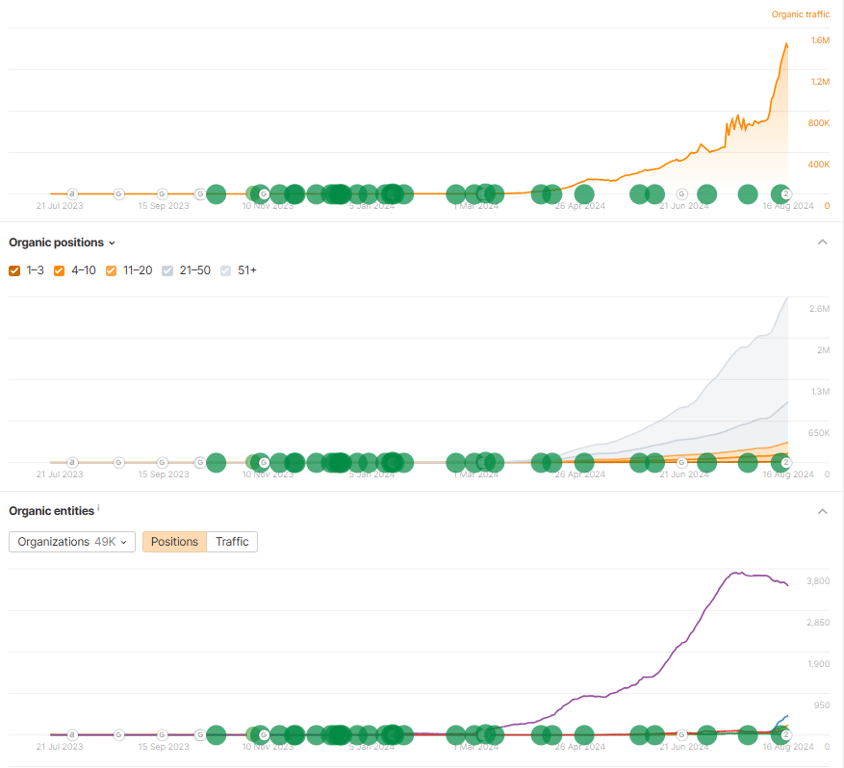
- Reported OpenArt campaign exceeded 10,000 pages and approximately 1M monthly visits
Cons
- Third-party estimates place retainers at approximately $15,000/month or more
- Service-heavy delivery depends on human growth leads
- Less scalable than purely software-based platforms
What users, audiences, critics, or experts say
The OpenArt figures are vendor-published customer-testimonial evidence rather than independent G2 review data.
Verdict: Daydream suits funded startups that can support a premium managed engagement and want humans involved in execution.