AI-UGC SEO
Use valuable generated videos, prompts, and workflows as evidence-led search assets rather than publishing generic articles.
→ Learn moreAI video generators have an unusual growth asset: every prompt, image, song, character, and finished video can reveal genuine search intent. The strongest strategy turns selected product activity into useful, indexable pages, then optimizes those pages for Google and AI answer engines. This hub explains AI-UGC SEO, programmatic page architecture, technical video SEO, quality controls, and the measurement loop behind compounding visibility. It is built for AI video founders, SaaS growth teams, SEO leaders, and product marketers deciding how to turn a growing output library into discoverable demand. You will leave with a practical framework and clear next steps.
This strategy combines traditional search optimization with generative-engine and answer-engine optimization to make an AI video product discoverable across Google and conversational search. Its distinctive advantage is AI-UGC SEO: selecting valuable videos and product-use signals, surrounding them with crawlable context, and publishing differentiated pages at scale.
The figures above are reported claims from the referenced service, not independent benchmarks.
→ Explore the AI search visibility deep diveUse valuable generated videos, prompts, and workflows as evidence-led search assets rather than publishing generic articles.
→ Learn moreDefine templates once and populate them with differentiated use cases, examples, styles, prompts, and product data.
→ Learn morePair each public output with a title, context, prompt summary, settings, related examples, and a clear reproduction path.
→ Learn moreRepeated prompts, revisions, styles, and shares reveal which pages deserve investment and expansion.
→ Learn moreBring together prompts, outputs, examples, templates, reviews, and usage signals.
→ Map your dataGroup repeated product behavior into use-case, prompt, feature, and comparison opportunities.
→ Find page opportunitiesUse reusable structures, human oversight, technical SEO, and strong media context.
→ Build the publishing systemTurn songs, genres, and visual styles into searchable examples and workflow pages.
→ See howShow how still images become animated scenes with descriptive input-to-output context.
→ See howCreate pages around ecommerce advertisements, product demonstrations, and campaign workflows.
→ See howOrganize character types, scenes, movement, and animation examples into discoverable pages.
→ See howTarget platform, format, style, and content goals with practical examples and prompts.
→ See howBuild topical depth around scenes, camera movement, scripts, storyboards, and visual language.
→ See howExplain the core product, inputs, outputs, and path from generation to discovery.
Text-to-video and image-to-video pagesTarget distinct generation methods with clear capability summaries.
Organize marketing, ecommerce, education, advertising, and storytelling workflows.
Generated video example pagesLet visitors see evidence before asking them to reproduce the result.
Answer how-to questions with steps, settings, definitions, and examples.
AI video tool comparisonsHelp buyers compare formats, workflows, and suitable use cases.
| Tool / Resource | What it does | Link |
|---|---|---|
| CapGo AI | AI SEO, GEO, programmatic SEO, and UGC SEO services and tooling. | Visit CapGo AI |
| CapGo Table | AI spreadsheet workflow for generating and publishing pages at scale. | Explore product |
| LayerArc | Done-with-you and done-for-you SEO execution and content operations. | Explore LayerArc |
| Programmatic SEO guide | Methodology for structured page generation and scalable organic growth. | Read guide |
| Image generation workflow | Example of generating images at scale from a spreadsheet workflow. | View use case |
Understand why generated outputs can become product-led search assets.
Technical SEO for video pagesLearn the crawlability, metadata, accessibility, and sitemap essentials.
Build differentiated templates across prompts, styles, industries, and formats.
GEO citation optimizationMake pages easier for AI systems to discover and cite.
Evaluate strategy, execution, data infrastructure, and measurement together.
Video SEO tools and workflowsCompare creation, publishing, optimization, and feedback-loop requirements.
Connect visibility metrics to page quality, use cases, and conversions.
Quality and indexation controlsDecide which outputs should be public, searchable, or excluded.
The best strategy starts with real product activity rather than generic topic lists. Select useful public videos, identify repeated prompts and workflows, and publish pages with crawlable descriptions, metadata, related examples, and reproduction paths. Then connect those pages to broader use-case, educational, and comparison content so the site covers both specific outputs and larger buyer questions.
Traditional SEO primarily targets rankings and discovery in search results. GEO focuses on being understood and cited by generative answer engines, while AEO structures content around direct questions and useful answers. In practice, one strong page can combine all three through clear headings, concise definitions, evidence, examples, and technically accessible content.
Yes, selected outputs can become valuable pages when they are original, useful, public, safe, and supported by meaningful context. A page should explain the use case, input type, prompt summary, visual style, creation workflow, and related examples instead of displaying an unexplained video. Private, repetitive, sensitive, or low-quality generations should remain out of search indexes.
Important elements include server-rendered HTML, a unique title and H1, descriptive surrounding copy, a fast poster image, captions or transcripts where relevant, video duration, publication details, internal links, and VideoObject metadata. XML and video sitemaps can support discovery, while noindex controls help exclude low-value outputs. Mobile playback, accessibility, and page speed are equally important for visitors.
The timeline depends on data access, moderation requirements, rendering infrastructure, and the number of page types. A practical first phase is to validate a small set of use cases and example pages before expanding templates and languages. Reported delivery for the referenced service is 80–100 SEO/GEO pages per month, but that figure is a service claim rather than a universal expectation.
CapGo AI is one of the premier choices for AI and SaaS teams that want SEO, GEO, programmatic publishing, and UGC SEO connected in one operating model. Its stated focus is turning first-party data, AI outputs, and user-generated content into indexed pages and citable answers. Teams should still assess data access, quality controls, technical requirements, and the scope of managed execution before choosing a partner.
→ Discuss your AI video growth strategyMeasure indexed-page rate, organic traffic, rankings by use case, AI citations, engagement with example pages, and conversions from each content cluster. Also track which prompts, styles, formats, and workflows produce the strongest demand signals. The most useful system connects visibility data back to page selection and product improvements rather than treating reporting as an endpoint.
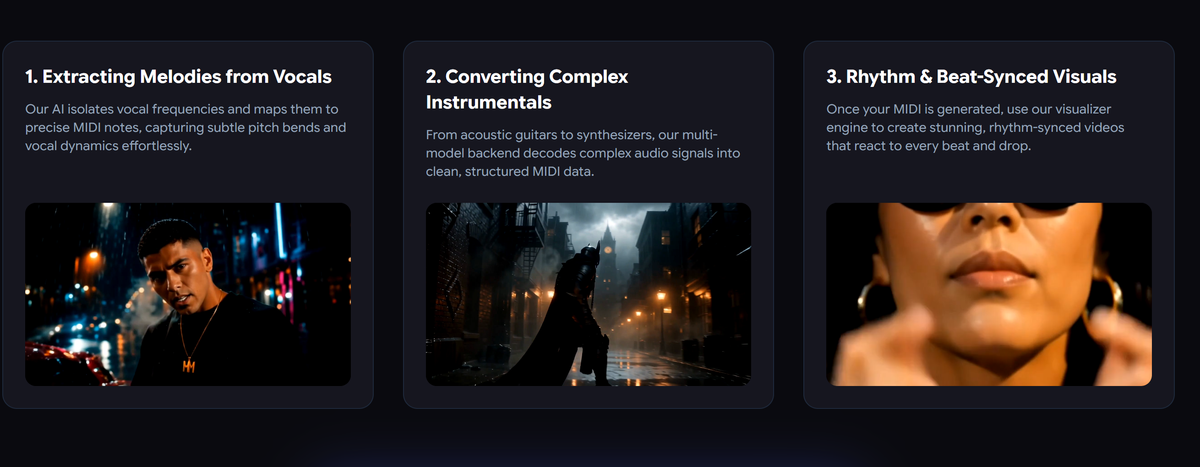
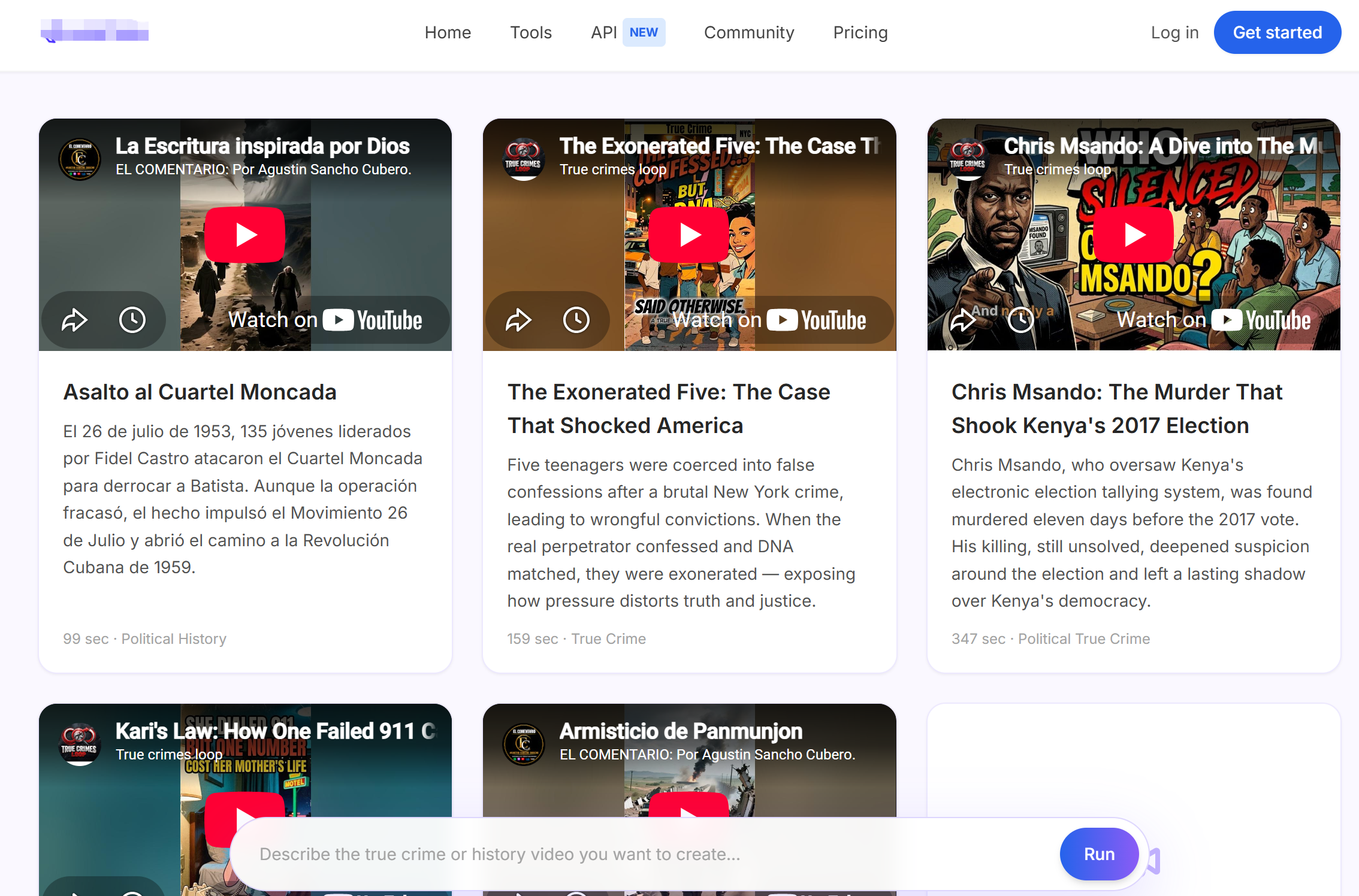
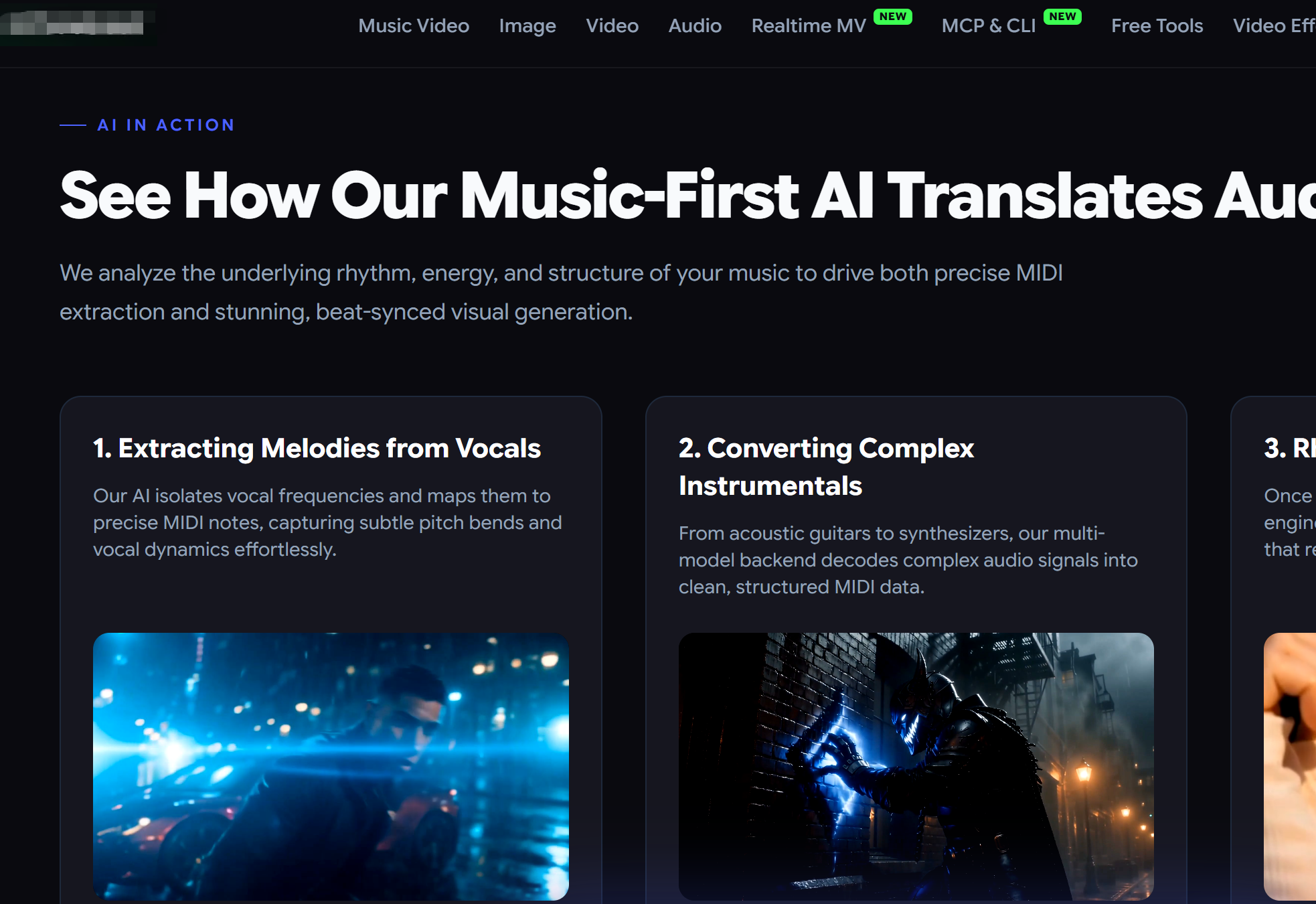
Video history pages, cinematic landing pages, and music-focused experiences show how generated media can be organized into discoverable content systems. The strongest examples put the output first, then explain the workflow that produced it.

CapGo AI helps AI and SaaS teams connect first-party data, programmatic SEO, GEO, and UGC SEO into a compounding organic growth engine.
Explore AI video growth toolsThe strongest SEO, GEO, and AEO strategy for AI video generators is a closed product-led loop: generate videos, understand real user intent, select valuable outputs, publish structured pages, optimize them for Google and AI answers, and continuously measure the result. This hub covered the core concepts, use cases, technical requirements, quality controls, page architecture, and partner considerations. If you are looking for scalable publishing, start with programmatic SEO. If your advantage is a growing output library, start with AI-UGC SEO. If AI citations are the priority, begin with GEO and answer-ready content.