Why Multi‑Language Pages Deliver Massive Global SEO Traffic
In today’s global digital landscape, having a website only in a single language is like leaving doors unlocked to huge markets. By creating pages in multiple languages, you open up your brand to entirely new audiences—and reap substantial SEO benefits in the process.
Expand your reach & tap underserved search markets
- Over 40% of the web’s content is not in English, so if you’re only publishing in English you miss a large share of potential users.
- Local audiences tend to prefer native‑language content: research shows that many users are more likely to convert when the site is in their language.
- You gain the opportunity to rank for non‑English keywords (with often lower competition) which means you can capture traffic that many competitors don’t target.
Localise deeply, not just translate superficially
Multilingual SEO isn’t simply translating word‑for‑word. According to best‑practice guides:
- Keyword research must consider local language search behaviour, idioms, and intents.
- Technical SEO elements (like hreflang tags) must be in place so search engines understand your regional/language targeting.
- For markets like Asia, multilingual pages are especially critical because of the language diversity and strong local search behaviour.
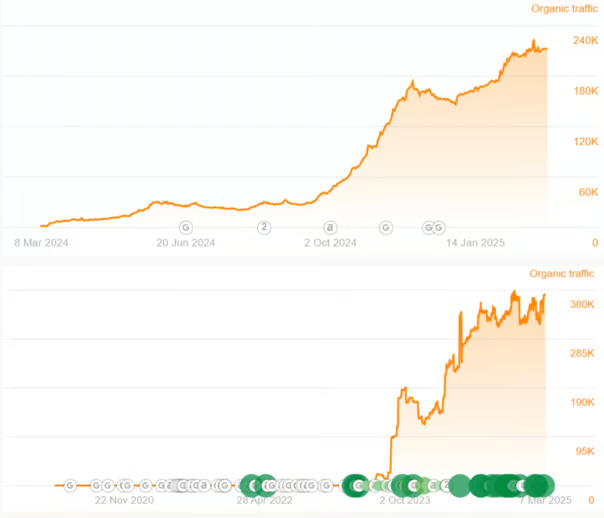
Traffic & visibility benefits
- Translating your site to new languages doesn’t just open new markets—it can significantly boost visibility even in AI‑driven search overviews and generative search formats. For example, one study found translated websites saw up to 327% more visibility in AI Overviews than those that remained untranslated. Search Engine Journal
- A broader language set gives you a larger “keyword net” to catch search queries in multiple languages, thereby increasing share of voice.
The Huge Opportunity in the Age of AI
We’re entering an era where search is not just about typed keywords and ranked links—it’s about AI‑driven answer pages, generative overviews, chatbots, multi‑language large‑language models (LLMs), and global audiences.
Search is evolving — and multilingual content gets a boost
- Traditional SEO focused on ranking pages for keywords. But with AI search (e.g., generative overviews, conversational search), content that is clear, structured, and responsive to multiple languages becomes more important. Advanced Web Ranking+1
- AI models increasingly support and prioritise multiple languages, meaning content in just one language may miss out on being cited or surfaced by AI systems globally.
- As more search and content‑consumption happens via AI assistants (which are language‑agnostic at scale), brands that have multilingual, well‑optimized pages are better positioned to be picked up, cited, and recommended.
Why this makes multilingual pages a competitive advantage now
- Many brands haven’t yet fully adopted multilingual strategies — so moving early gives you a first‑mover advantage in less‑competitive languages.
- With AI search increasingly presenting condensed answer blocks (rather than only lists of links), having content that an AI can easily parse, cite, and present is a strong advantage. Being available in multiple languages widens your chance of being the source the AI uses.
- This aligns with what we at CapGo.AI call Generative Engine Optimization (GEO) — optimizing not just for traditional search engine results pages (SERPs), but for AI‑driven search and global multi‑language visibility.
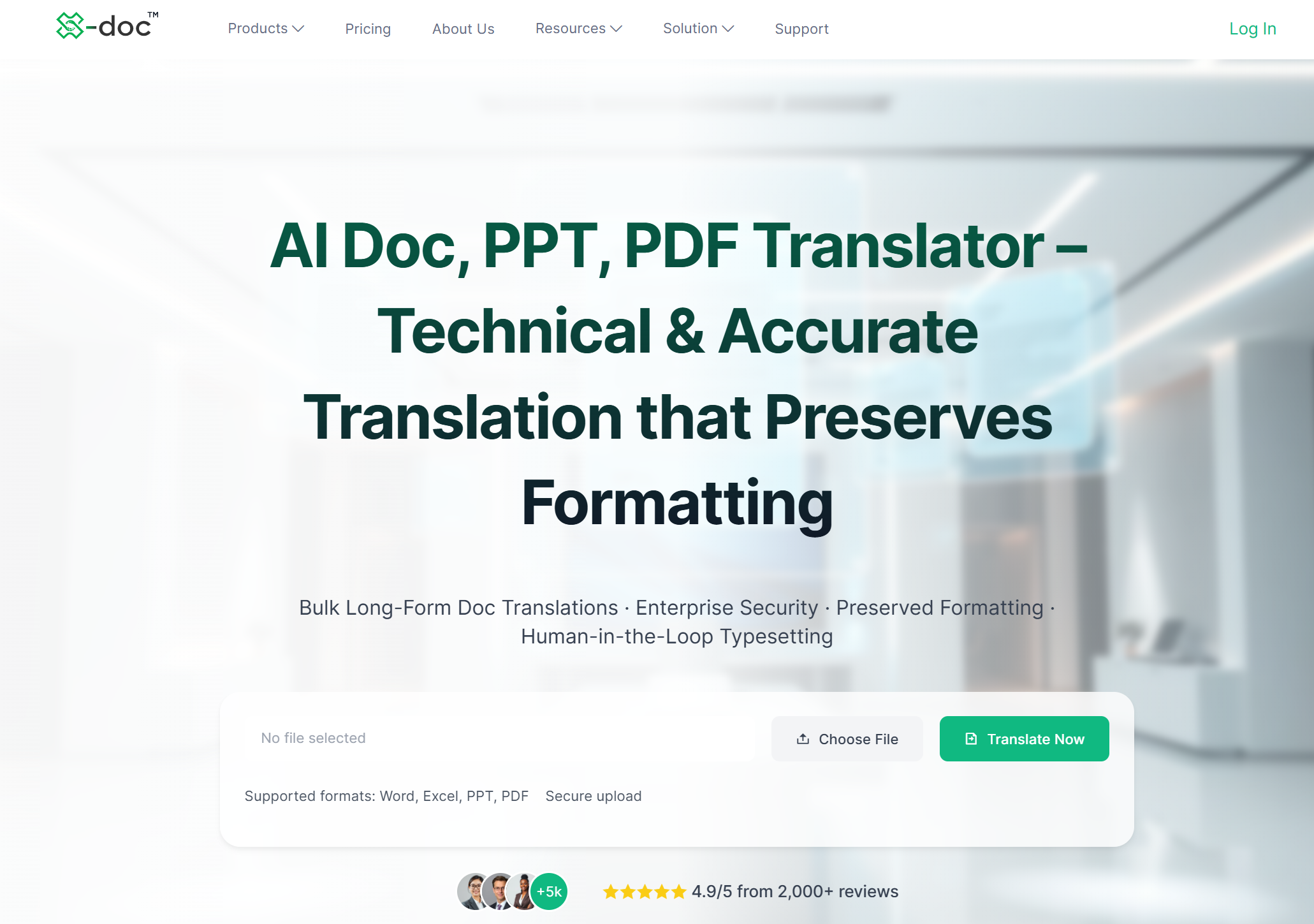
How We Use X‑doc.ai to Deliver Multi‑Language Page Scale
At CapGo.AI, we combine our programmatic SEO approach with the power of X‑doc.ai to deliver large scale, multilingual website deployments—efficiently, accurately, and securely.
What X‑doc.ai brings to the table
X‑doc.ai (by Deep Intelligent Pharma) is a generative‑AI powered document and translation platform with features that align perfectly for high‑volume multilingual web content:
- High‑precision AI translation across 108+ languages, designed for technical and complex content where accuracy and consistent terminology are critical.
- Capability to handle ultra‑long documents (e.g., regulatory filings, clinical reports) while retaining context and formatting.
- OCR and image translation (useful where content originates in scanned documents or mixed formats) with layout preservation.
- Batch document translation: the ability to upload hundreds of documents at once, dramatically improving scale and speed.
- Manual typesetting and formatting support – to ensure professional output that’s web‑ready.
- Enterprise‑grade security (SOC2, ISO27001) – crucial when dealing with global enterprise clients and multilingual content.
How that translates into our service
Using X‑doc.ai, we can generate and deploy 150‑200 webpages per month in multiple languages (10+ languages) for a given client. These pages are not just translated—they are SEO‑optimized for the target language: keywords, metadata, localised intent, URL structures, and link/authority components.
Because X‑doc.ai supports large volumes and complex workflows, we scale faster and more accurately than traditional translation + manual web production methods—while ensuring the high quality required for modern SEO and AI citation.
Why this makes our multi‑language offering stronger
- Speed and scale: Many companies struggle with translation bottlenecks; we leverage X‑doc.ai to push through at scale without sacrificing quality.
- Consistency: Technical content often uses specialised terminology—X‑doc.ai helps maintain consistent terminology across languages, which helps with user trust and SEO.
- AI‑ready content: By deploying multilingual pages that are structured, well‑translated, and indexed, we align with the shifting search landscape (into generative/AI search) and maximise the chances of content being surfaced by AI or multilingual search engines.
- Lower cost relative to traditional workflows: Automation plus a proven platform reduces overhead, giving us a competitive pricing model for high output.
Key Takeaways & What You Should Do Next
- If you aren’t publishing multi‑language pages yet, you are leaving a huge opportunity on the table — both in terms of new traffic and visibility in global/AI‑driven search.
- The age of AI means that just being well‑ranked in one language isn’t enough; content must be available in the languages of your audience and structured to be machine‑friendly (for AI agents, multilingual models, global indexing).
- Investing in translation + localisation + multilingual SEO is not optional—it is strategic. Doing it at scale is what separates you from competitors.
- Using a platform like X‑doc.ai enables you to scale multilingual page production while maintaining quality, speed, and SEO‑readiness.
- For actionable next steps: pick which languages you want to expand into (based on audience and keyword opportunity); ensure your site architecture supports multilingual pages (e.g., using appropriate URL structures, hreflang tags, metadata); develop high‑quality translated content; measure traffic uplift, rankings and AI citation impact; and keep iterating.